NASA’s ISAM State of Play: The Industry Standard for Space Servicing, Assembly, and Manufacturing
When companies began approaching NASA’s Langley Research Center, asking to be included in the In-Space Servicing, Assembly, and Manufacturing (ISAM) State of Play for access to…
SOURCE DETAIL AVAILABLE
NASA supplied 5 additional source-detail passages. They are attributed to the publisher, not presented as independent Murray Report reporting.
What the source reports
3 min read Preparations for Next Moonwalk Simulations Underway (and Underwater) When companies began approaching NASA’s Langley Research Center, asking to be included in the In-Space Servicing, Assembly, and Manufacturing (ISAM) State of Play for access to competitive intelligence, the team knew they had crossed an inflection point.
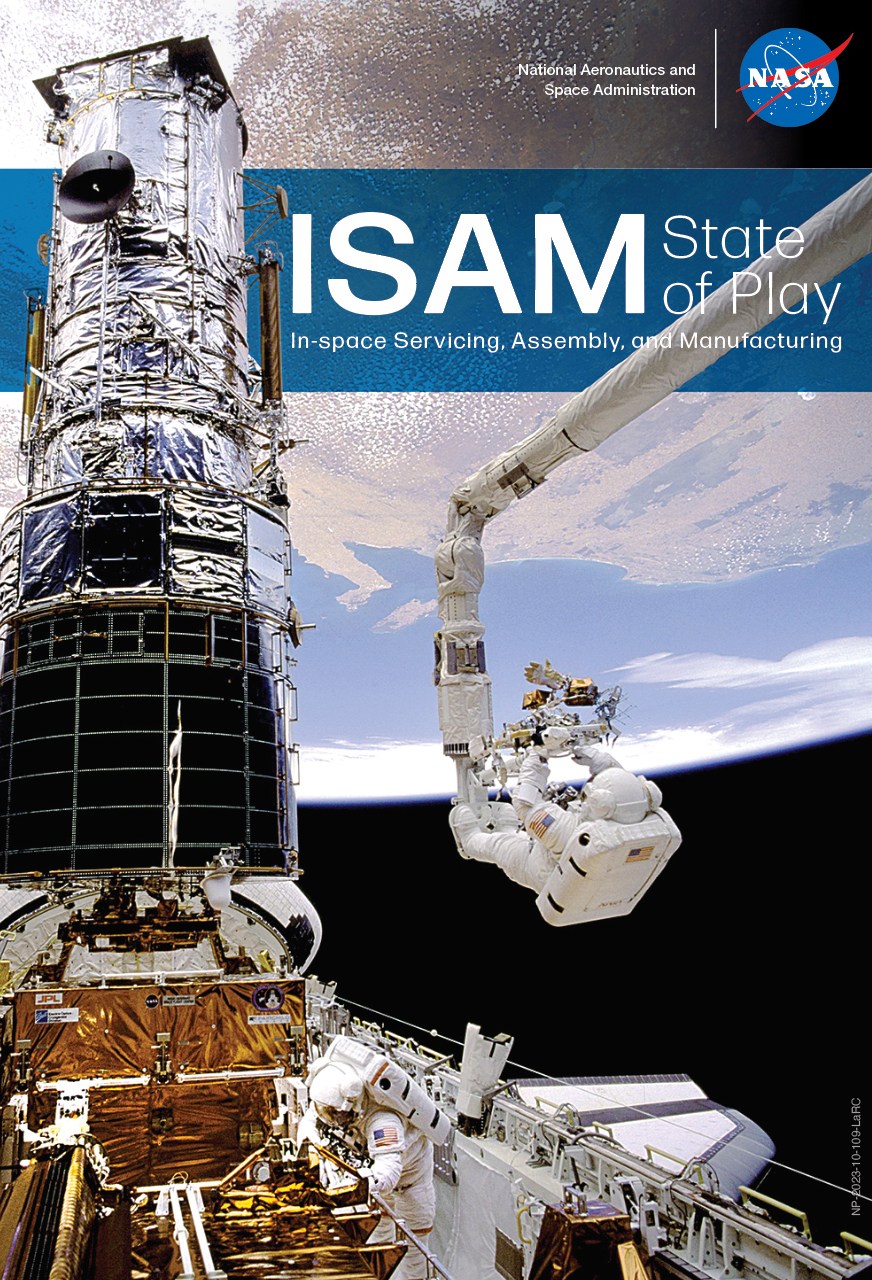
“We’ve had some unnamed companies ask if we have any proprietary information,” says Dale Arney, senior team lead for the ISAM Technology Portfolio at NASA Langley. The answer is “no,” but that impartiality is precisely what makes the State of Play invaluable to an industry trying to understand a rapidly expanding field. The cover of the ISAM State of Play, featuring Astronaut F.
Story Musgrave, anchored on the Space Shuttle Endeavor’s robotic arm, preparing to be elevated to the top of the Hubble Space Telescope during Hubble’s first servicing mission in 1993.
Credit: NASA Published since 2021, the 2026 edition has grown to 368 pages documenting current ISAM capabilities across 11 functional areas, from robotic manipulation to refueling and structural assembly.
The document serves as both encyclopedia and roadmap for the technologies that will enable spacecraft to be serviced, assembled, and manufactured in orbit rather than launched as integrated systems. “The field itself has expanded more than linearly since we started,” Arney explains.
The passages above are source-attributed excerpts from NASA. Refer to the original publication for the complete reporting and any subsequent updates.
Understanding space and mission announcements
Space-agency updates can describe planned work, early research findings, completed milestones or operational changes. A planned mission and a completed result are different types of announcements, and scientific conclusions often evolve as more measurements become available.
Primary mission pages, data releases, agency publications and peer-reviewed studies help distinguish what is already observed from what scientists are still investigating.
What to verify next
Review the original publication for the mission or project name, measurement dates, links to source data and any qualifications in the researchers’ conclusions.
This page contains source-attributed material supplied with the news feed. Murray Report has not independently verified every claim in the original publication. For the full event-specific details, consult the original NASA publication through the link below.
Read the original reporting
For complete reporting, supporting documents and subsequent updates, visit the original publisher.
Read original article ↗