NASA’s Hubble Marks Way for Roman Space Telescope
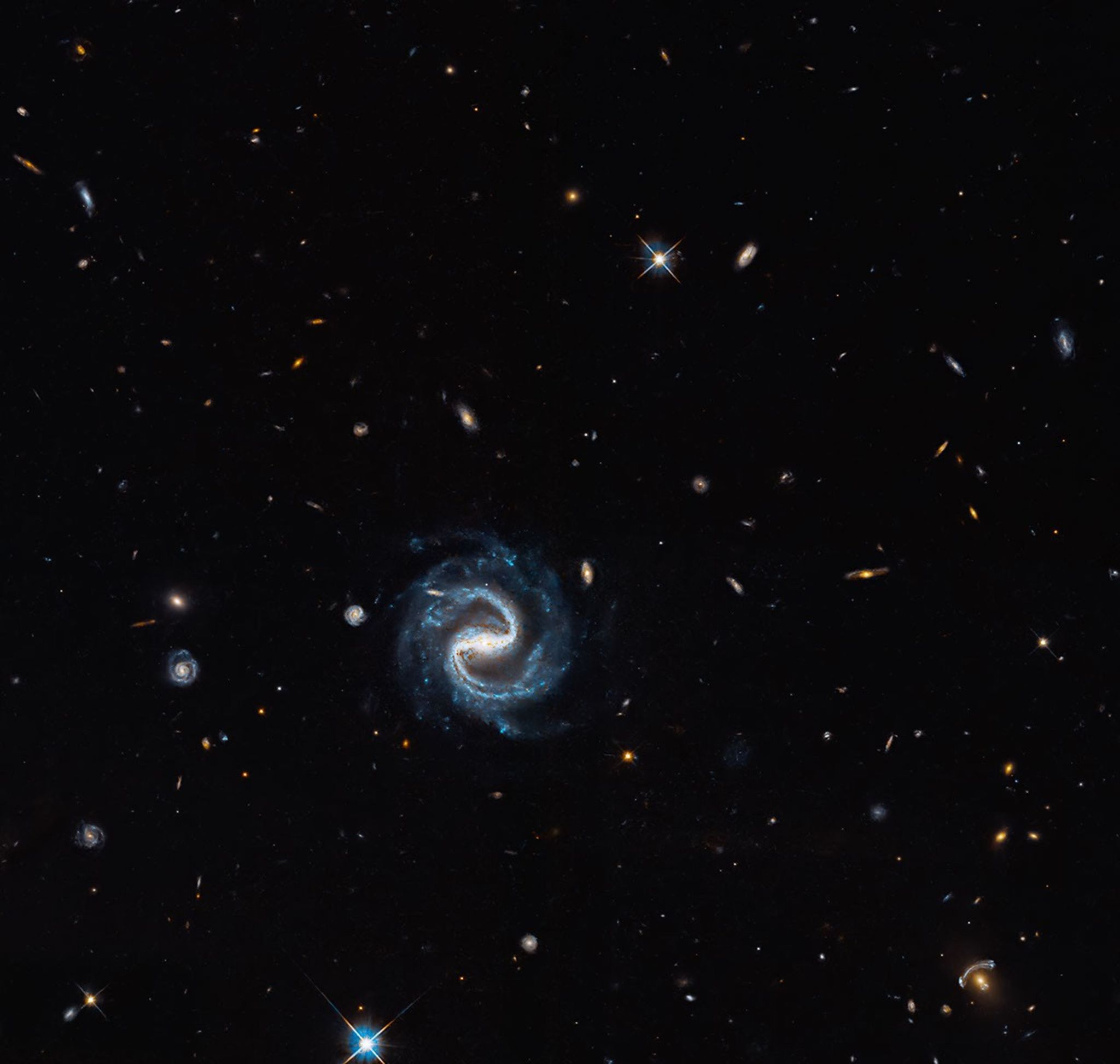
A sweeping barred galaxy takes center stage in this Oct. 22, 2026, image, but the gravitational lensing at bottom right is the real target. This observation is one of many…
SOURCE DETAIL AVAILABLE
NASA supplied 3 additional source-detail passages. They are attributed to the publisher, not presented as independent Murray Report reporting.
What the source reports
A sinuous spiral galaxy (center) appears in the same field of view as a vivid gravitational lens (right corner) in this Hubble image. NASA, ESA, and X. Huang (University of San Francisco); Processing: Gladys Kober (NASA/Catholic University of America) A sweeping barred galaxy takes center stage in this Oct.
22, 2026, image, but the gravitational lensing at bottom right is the real target. This observation is one of many gravitational lensing images taken by NASA’s Hubble Space Telescope in preparation for science with the new Nancy Grace Roman Space Telescope .
Astronomers will use these images to analyze gravitational distortions to learn more about dark matter in the foreground galaxies and to lay the groundwork for future Roman observations. Images like this offer a glimpse of how Hubble and Roman will work together to build an even more comprehensive picture of the cosmos. Image credit: NASA, ESA, and X.
The passages above are source-attributed excerpts from NASA. Refer to the original publication for the complete reporting and any subsequent updates.
How astronomers assess a candidate discovery
A newly reported astronomical candidate is not necessarily a confirmed discovery. Researchers commonly compare observations from different dates, calculate possible trajectories and test whether the measurements can be explained by known objects or observational limitations.
For distant solar-system objects, additional observations can refine an orbit and help determine whether an object meets a particular scientific classification. Early results may change as more data are analyzed or as other researchers review the findings.
What to verify next
Check whether the original institution calls the object a candidate or a confirmed discovery, which observations were used, and whether a research paper or supporting data are available.
This page contains source-attributed material supplied with the news feed. Murray Report has not independently verified every claim in the original publication. For the full event-specific details, consult the original NASA publication through the link below.
Read the original reporting
For complete reporting, supporting documents and subsequent updates, visit the original publisher.
Read original article ↗