Contractor to Civil Servant: NASA Welcomes Jared Spiers
Jared Spiers had an interest in contributing to NASA’s mission long before becoming a civil servant for the agency. Growing up close to NASA’s Stennis Space Center near Bay St. Louis,…
SOURCE DETAIL AVAILABLE
NASA supplied 5 additional source-detail passages. They are attributed to the publisher, not presented as independent Murray Report reporting.
What the source reports
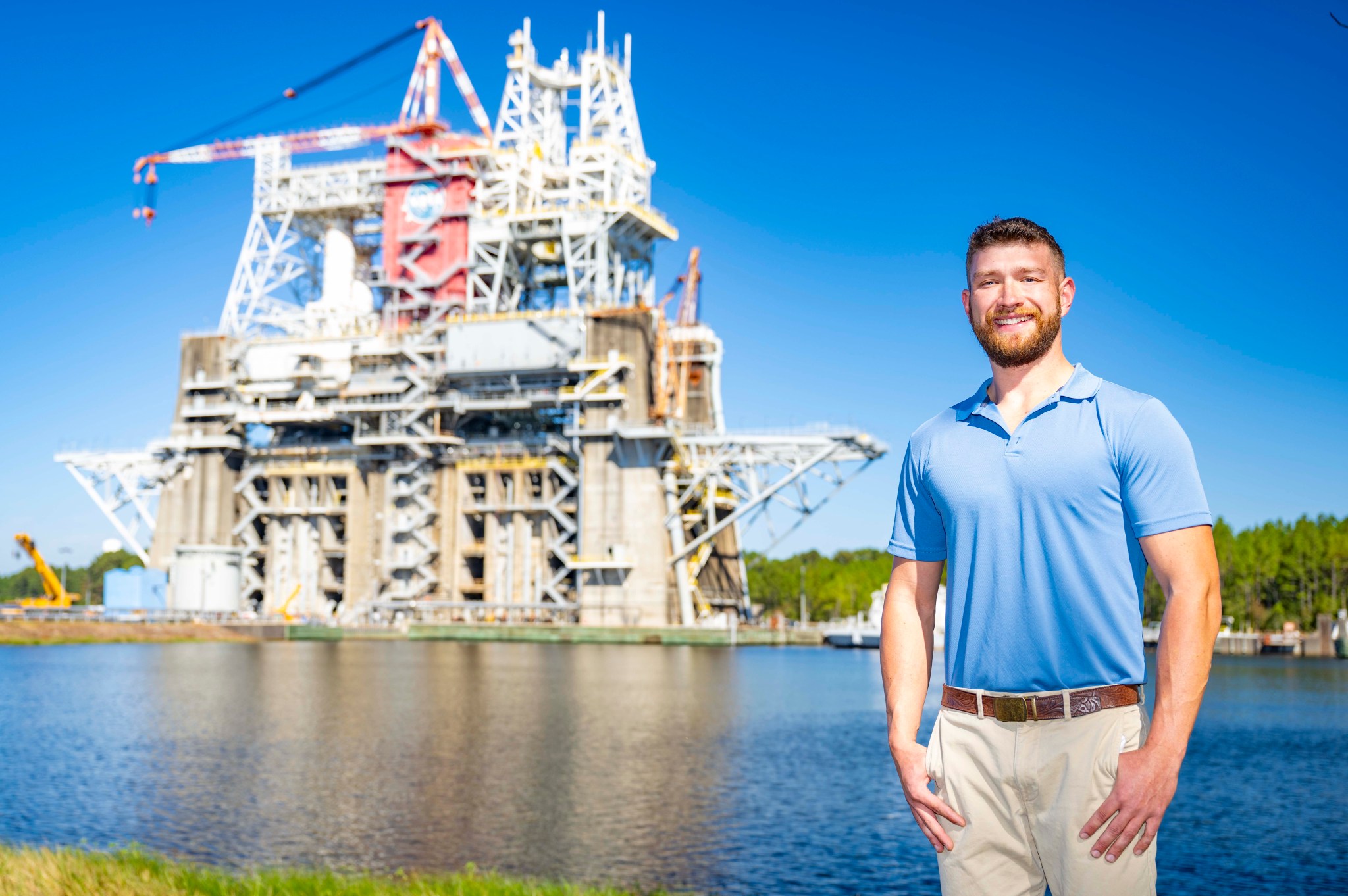
4 min read Preparations for Next Moonwalk Simulations Underway (and Underwater) Jared Spiers, electrical engineering technician at NASA’s Stennis Space Center near Bay St. Louis, Mississippi, poses for a photograph with the Thad Cochran Test Stand in the background on Oct. 28, 2026.
Spiers is now a NASA civil servant at Stennis as part of the administrator’s directive to strengthen technical core competencies within the civil service workforce. NASA/Danny Nowlin Jared Spiers had an interest in contributing to NASA’s mission long before becoming a civil servant for the agency. Growing up close to NASA’s Stennis Space Center near Bay St.
Louis, Mississippi, and hearing about his father’s work there, he gained a firsthand connection to the nation’s space program. Before graduating high school, he knew exactly where he wanted to work. Spiers graduated from Pearl River Community College in 2017, where he earned three associate degrees in instrumentation, electronics, and electrical technology.
He started working at NASA Stennis as a contractor on the Monday following graduation. Spiers contributed to the mission of returning to the Moon through his work at the Thad Cochran Test Stand (B-1/B-2), a facility originally constructed to test Saturn V rocket stages during the Apollo Program.
He helped prepare the stand for the Green Run test series of the first core stage for NASA’s SLS (Space Launch System) rocket before the successful Artemis I test flight. “Being hands-on with the rocket was a whole different experience,” said Spiers.
The passages above are source-attributed excerpts from NASA. Refer to the original publication for the complete reporting and any subsequent updates.
Understanding space and mission announcements
Space-agency updates can describe planned work, early research findings, completed milestones or operational changes. A planned mission and a completed result are different types of announcements, and scientific conclusions often evolve as more measurements become available.
Primary mission pages, data releases, agency publications and peer-reviewed studies help distinguish what is already observed from what scientists are still investigating.
What to verify next
Review the original publication for the mission or project name, measurement dates, links to source data and any qualifications in the researchers’ conclusions.
This page contains source-attributed material supplied with the news feed. Murray Report has not independently verified every claim in the original publication. For the full event-specific details, consult the original NASA publication through the link below.
Read the original reporting
For complete reporting, supporting documents and subsequent updates, visit the original publisher.
Read original article ↗