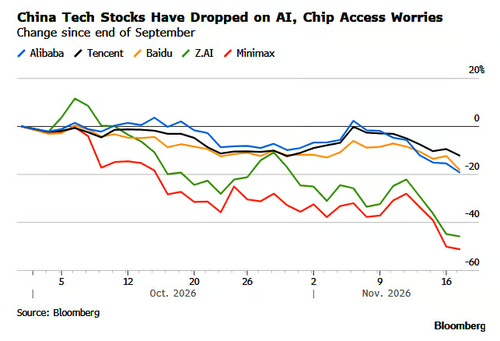
China's Ministry of Commerce has expressed strong dissatisfaction with proposed US restrictions on advanced AI chip exports. The ministry warned that if the US proceeds, China will take countermeasures to protect its interests. Although the ministry did not specify potential actions, it has previously used export restrictions on critical minerals as a means of retaliation.
The US Commerce Department's proposed rules aim to limit the flow of advanced chips to Chinese data centers, including those accessed remotely through overseas data centers. This move has already impacted Chinese AI stocks, with companies like Alibaba and Baidu experiencing significant declines. The restrictions have also affected other regions, with semiconductor stocks and tech companies feeling the effects.
Nvidia, a major US chip supplier, has formed a board committee to oversee national security and export controls in response to the US government's efforts to restrict China's access to AI chips. The company recognizes the challenges posed by advanced silicon technologies and is committed to working with government and industry partners to establish a framework that balances national security with technological innovation.
The new restrictions have added to concerns about AI valuations and spending returns, with some analysts warning of a concrete risk to revenues and access to computing capacity. The situation is being closely watched, with potential implications for the global tech industry and the ongoing tensions between the US and China.