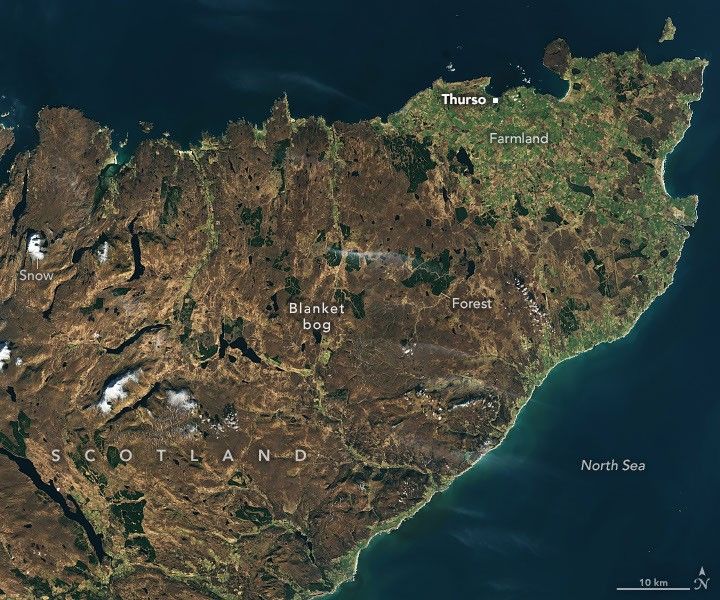
The Flow Country in northern Scotland is home to a unique and ecologically significant ecosystem, known as blanket bogs, which store large quantities of carbon. These bogs are characterized by waterlogged soils that prevent microbes from fully breaking down dead plant material, resulting in the accumulation of thick layers of peat.
The Flow Country is the largest such ecosystem in Europe and has been recognized as a UNESCO World Heritage Site. The blanket bogs in the Scottish Highlands cover approximately 1,900 square kilometers and are home to over 30 species of sphagnum moss.
The peat bogs in this region have been accumulating carbon for thousands of years, with some areas building deposits exceeding eight meters thick. Scientists estimate that the world's peatlands, which cover only 3 percent of the Earth's land surface, store over 600 gigatons of carbon, which is roughly twice the amount stored in all the world's forests combined.
A recent image captured by the Operational Land Imager on Landsat 8 shows the blanket bogs in the Scottish Highlands, with boggy areas appearing dark brown and sprinkled with lakes. The unique characteristics of these ecosystems make them an important area of study for scientists, who are working to understand the role of peatlands in the global carbon cycle.