Cyprus, an island with a complex geological history, began forming around 90 million years ago. Molten rock from the seafloor solidified and built new oceanic crust, eventually emerging as a rugged island composed of ophiolite, a type of rock with a distinctive appearance.
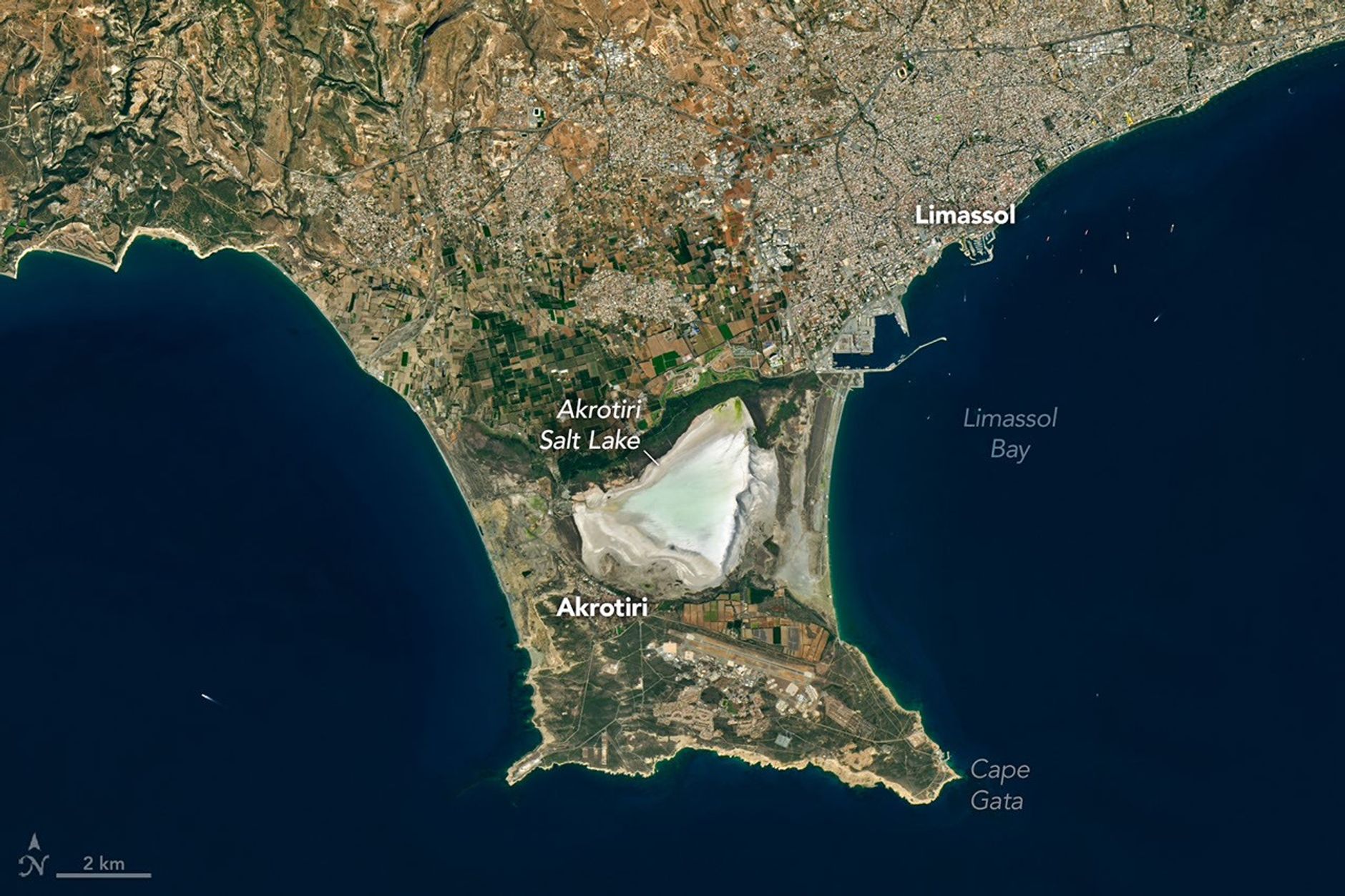
Over time, younger layers of sedimentary rocks accumulated, and the island underwent significant changes due to tectonic forces and geologic uplift. The Akrotiri Peninsula, located at the southernmost tip of Cyprus, was formed through the creation of two land bridges, or tombolos, which connected the island to a smaller landmass to the south.
The peninsula's sandy edges and Akrotiri Salt Lake, a coastal lagoon, are visible in recent images captured by Landsat 8. The lake's water levels vary with the seasons, and it has historically attracted large populations of overwintering flamingos, although their numbers have declined in recent years.
Cyprus is also home to a significant population of snakes, including blunt-nosed vipers, and has a long history of feline introduction to control the snake population. According to legend, the Roman Empress Helena sent cats from Egypt to the island to hunt snakes, and today, Cyprus has a large population of cats, with over one million felines inhabiting the island.
The Holy Monastery of St. Nicholas of the Cats, located on the Akrotiri Peninsula, is a testament to this history and still cares for hundreds of cats.