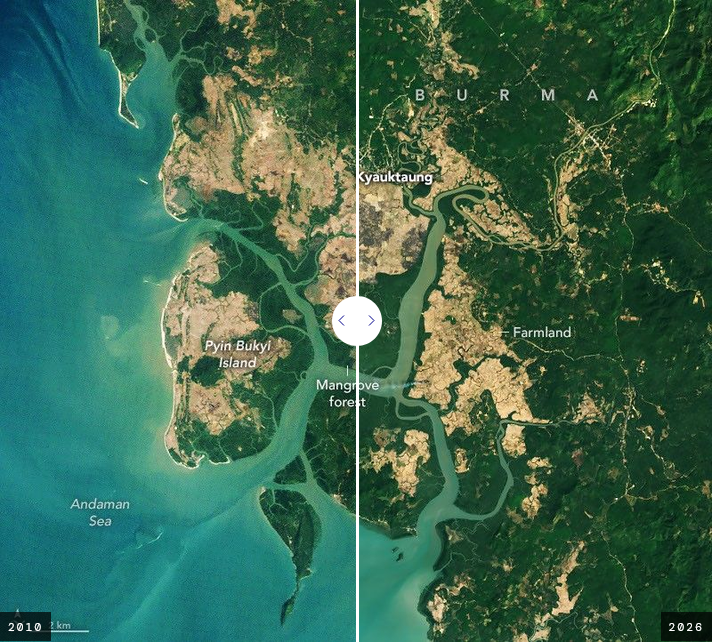
According to research published in Science, mangrove forests have experienced a global rebound since around 2010, with expansion led by Asia, Australia, and South America. Scientists analyzed Landsat imagery from 1984 to 2023 and found that after losing nearly 3,000 square kilometers of mangroves between 1984 and 2010, the global mangrove area increased by nearly 2,000 square kilometers after 2010. The researchers also noted that many mangrove forests now have denser canopies, indicating healthier forests, particularly in South America.
The expansion of mangroves was largely due to the colonization of new areas, with about two-thirds of the growth attributed to this factor, and the remaining third due to restoration and regrowth in degraded areas. A notable example of this reversal is in Southeast Asia, especially Burma, where mangrove area began expanding around 2010 after rapid loss in the 1980s and 1990s. The turnaround is attributed to increased awareness, restoration efforts, and strengthened legal protections for forests.
Mangrove trees play a crucial role in protecting coastal communities from erosion and storm surges, and their ecosystems store significant amounts of carbon. Despite the gains, deforestation remains a challenge, and some areas, such as the Niger Delta, have experienced substantial mangrove losses. The researchers caution that conservation efforts should continue, as the global successes with mangroves should not be seen as grounds for complacency. The study highlights the importance of conservation and slowing deforestation to achieve positive impacts on mangrove forests.