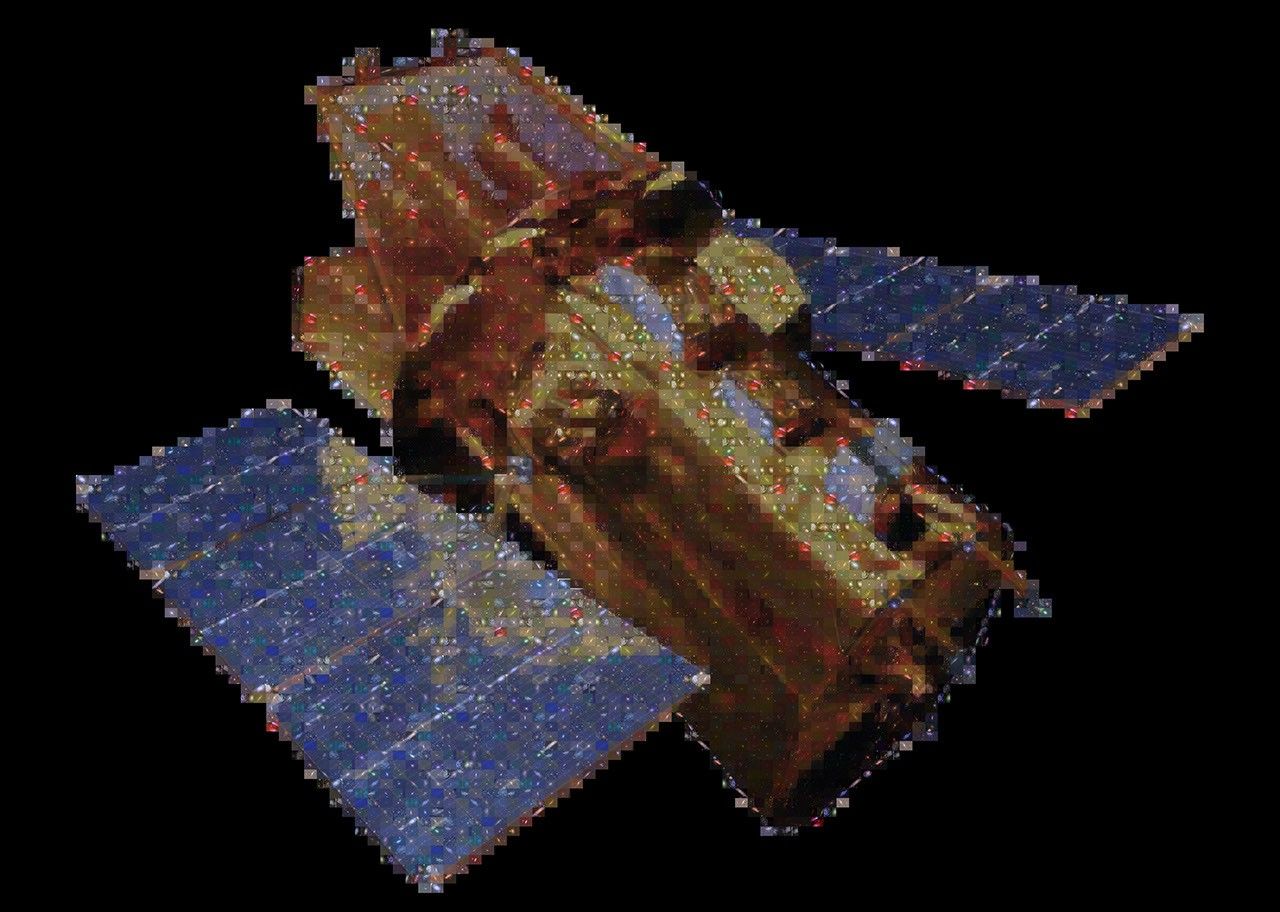
NASA's Neil Gehrels Swift Observatory has come to the end of its nearly 22-year service, re-entering Earth's atmosphere on November 4 over the North Sumatra region of Indonesia. The satellite's orbit had been decaying, a process accelerated by the most recent solar maximum, and an attempt to rescue it by boosting its orbit was unsuccessful.
The Swift Observatory was equipped with a combination of instruments, including an X-ray telescope, a gamma-ray telescope, and an Ultraviolet/Optical Telescope, which worked together to study the fastest and most energetic explosions in the universe in unprecedented detail.
The data acquired by the Swift Observatory over its mission will continue to contribute to the understanding of the cosmos for years to come, inspiring new missions to explore space and seek out new scientific discoveries. The satellite burned up on reentry, but its legacy will live on through the insights it has provided into the universe.