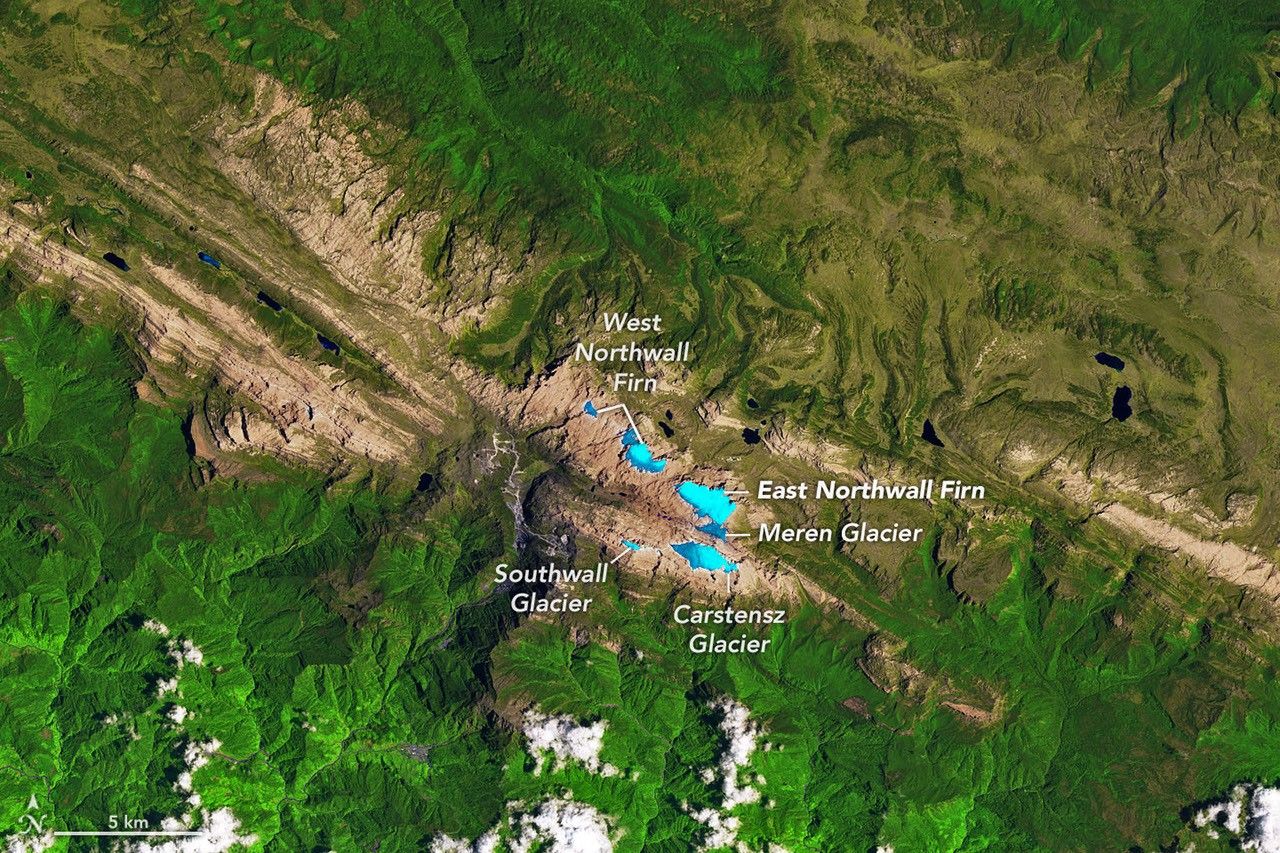
Earth Observatory Science Earth Observatory The Last Ice on Puncak Jaya Earth Earth Observatory Image of the Day EO Explorer Topics All Topics Atmosphere Land Heat & Radiation Life on Earth Human Dimensions Natural Events Oceans Remote Sensing Technology Snow & Ice Water More Content Collections Global Maps World of Change Articles Earth Matters Blog Blue Marble: Next Generation EO Kids Mission: Biomes About About Us Subscribe 🛜 RSS Contact Us Search 1988 2026 A false-color satellite image from 1988 shows mountain ridges of Indonesia’s Sudirman Range.
Bare rock appears brown, and glacial ice, shown in blue, caps several of the highest ridges. Vegetation at lower elevations appears green. NASA Earth Observatory / Lauren Dauphin A false-color satellite image shows the same area in 2026. Only a few small fragments of ice remain, shown in blue, and bare brown rock covers most of the ridgetops that were icy in 1988.
Bare rock appears brown, and glacial ice, shown in blue, caps several of the highest ridges. Vegetation at lower elevations appears green. NASA Earth Observatory / Lauren Dauphin A false-color satellite image shows the same area in 2026. Only a few small fragments of ice remain, shown in blue, and bare brown rock covers most of the ridgetops that were icy in 1988.
NASA Earth Observatory / Lauren Dauphin 1988 2026 A false-color satellite image from 1988 shows mountain ridges of Indonesia’s Sudirman Range. Bare rock appears brown, and glacial ice, shown in blue, caps several of the highest ridges. Vegetation at lower elevations appears green. NASA Earth Observatory / Lauren Dauphin A false-color satellite image shows the same area in 2026.
Only a few small fragments of ice remain, shown in blue, and bare brown rock covers most of the ridgetops that were icy in 1988. NASA Earth Observatory / Lauren Dauphin 1988 2026 Curtain Toggle 2-Up On the island of New Guinea, Indonesia’s Sudirman Range is one of the few places near the equator that have long held ice year-round.
But near the summit of Puncak Jaya, the ice has dwindled to patches too small to flow like glaciers. Positioned in the tropics beside the largest expanse of warm ocean water on Earth, the range’s glaciers lie near the warmest conditions in which ice can survive year-round.