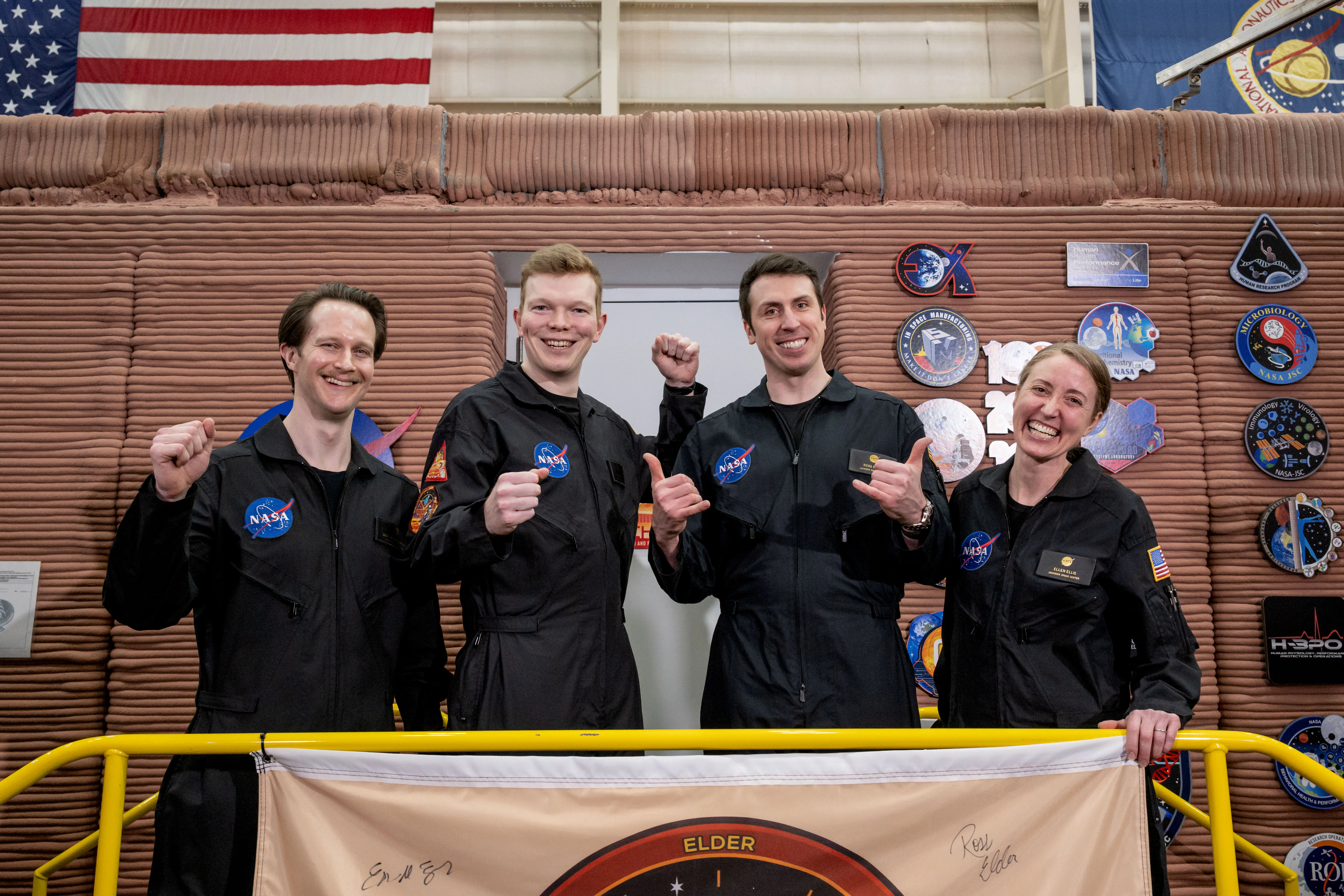
After spending 378 days in a simulated Mars habitat, the four-member CHAPEA Mission 2 crew emerged on October 31, completing their mission at NASA's Johnson Space Center in Houston. The crew, consisting of Ross Elder, Ellen Ellis, James Spicer, and Matthew Montgomery, had been living in the 1,700-square-foot, 3D-printed Mars Dune Alpha habitat since October 19, 2025.
During their time in the habitat, they participated in simulated Marswalks, robotic operations, and other activities to test their health and performance in a Martian-like environment. The crew's experience was marked by limited resources and communication delays of up to 22 minutes each way, which required immense physiological and psychological strength, teamwork, and human grit.
According to NASA astronaut Jack Hathaway, the crew's time in isolation was significant, with many major space-related events occurring during their mission, including his own 237-day mission aboard the space station and the Artemis II astronauts' trip around the Moon.
The CHAPEA crew collected valuable health and performance data during their mission, which will help prepare for future human exploration beyond Earth. The crew members reflected on their experience, with Commander Ross Elder praising the team's motivation and improvement, and Medical Officer Ellen Ellis highlighting the importance of discipline and tactical creativity in solving problems.
Flight Engineer James Spicer compared the experience to living on a submarine or boat, where limited supplies and space shaped daily decisions.