Explore Hubble Hubble Home Overview About Hubble The History of Hubble Hubble Timeline Why Have a Telescope in Space?
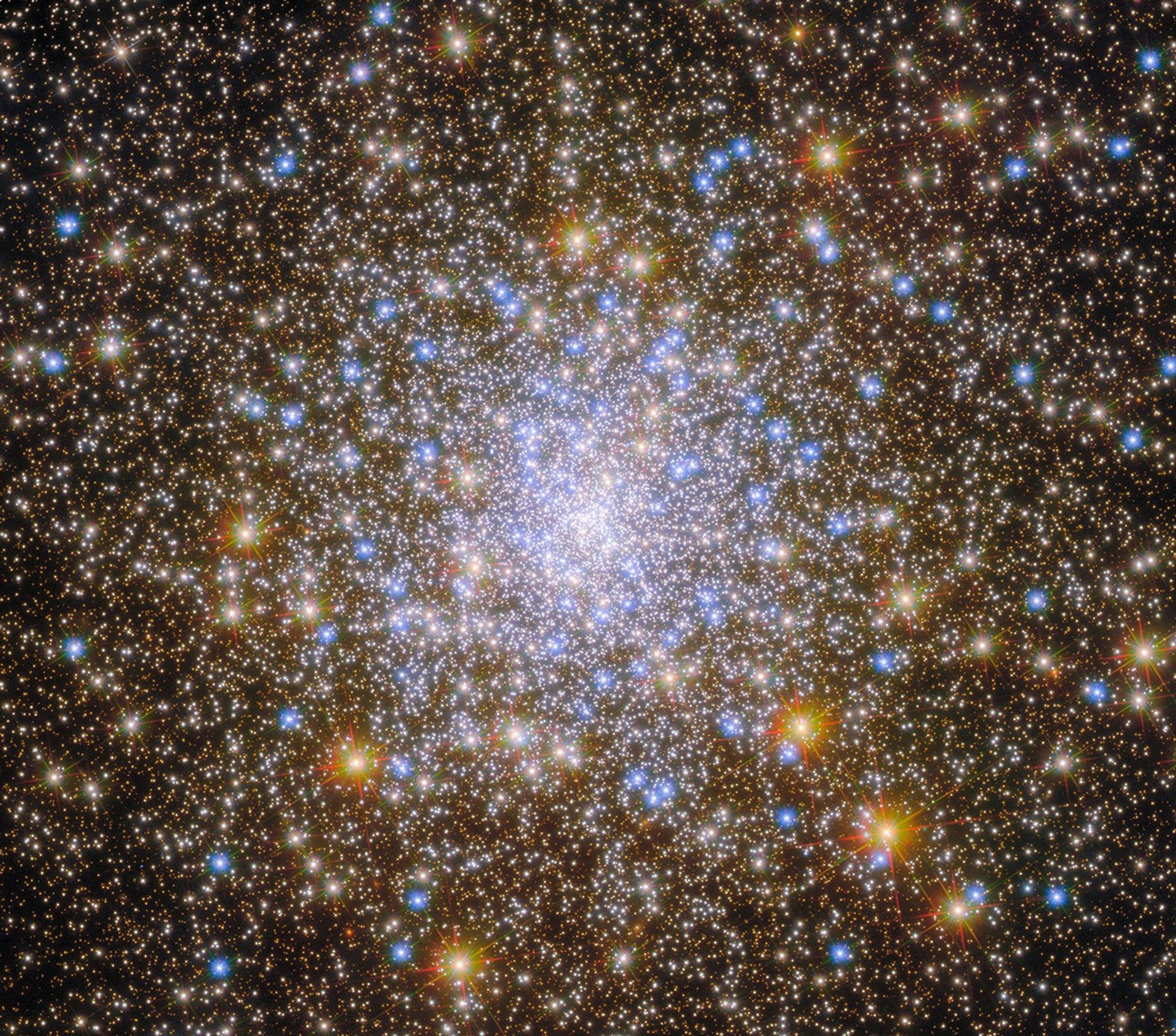
ESA/Hubble & NASA, M. Libralato, G. Piotto, A. Sarajedini This NASA/ESA Hubble Space Telescope image provides a lesson in galactic history. The sparkling collection of stars is named Messier 30 (M30) after the French astronomer, Charles Messier , who cataloged M30 and other diffuse objects that might be mistaken for comets in the early telescopes of Messier’s time.
M30 lies about 27,500 light-years away in the constellation Capricornus. M30 is a globular cluster : a roughly spherical grouping of stars containing anywhere from tens of thousands to millions of stars. These clusters generally reside on the outskirts of galaxies, orbiting within a vast, diffuse region called the halo like a swarm of moths around a lightbulb.