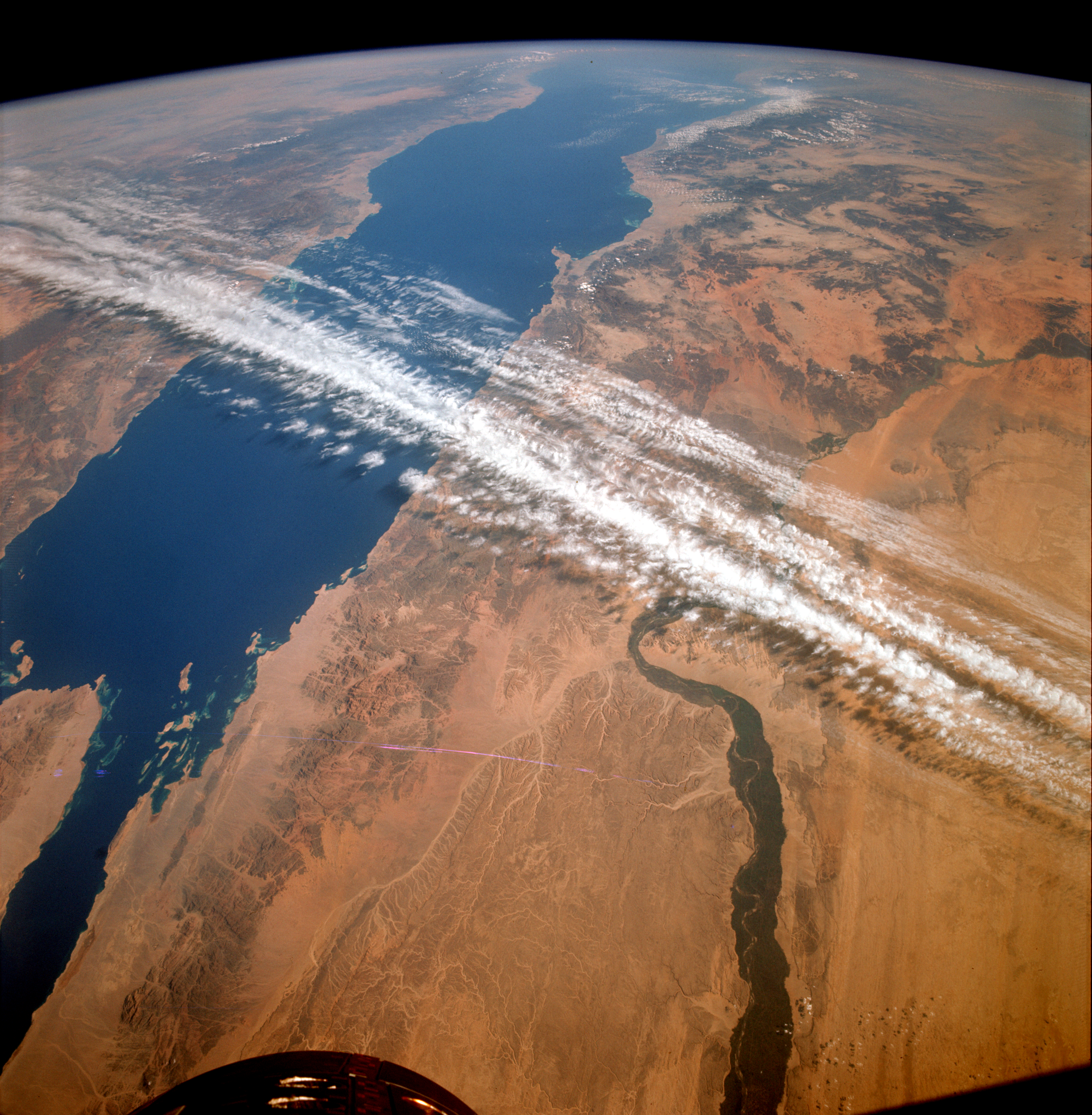
NASA's Gemini Program, which concluded with the Gemini XII mission, played a significant role in the development of Earth observation from space. During their four-day mission in space, astronauts James A. Lovell Jr. and Edwin E. "Buzz" Aldrin Jr. captured images of the Earth's surface, including the area surrounding the Red Sea and Nile river valley.
These photos, taken on November 14, 1966, demonstrated the value of orbital imagery for studying Earth's surface, and helped scientists make the case for a dedicated Earth observation satellite program. The Gemini XII mission, which orbited Earth from November 11 to 15, 1966, was not only crucial for sending American astronauts to the Moon, but also spurred the development of Earth observation.
The images taken by Lovell, Aldrin, and other Gemini astronauts were instrumental in convincing scientists and advocates of the need for Earth-observing satellites. One strong advocate, William T. Pecora, noted that the Earth Resources Observation Satellite program was conceived in 1966, largely due to the utility of Mercury and Gemini orbital photography in Earth resource studies.
This ultimately paved the way for the Landsat program. The Gemini astronauts' photos marked an important step in the development of Earth observation from space.