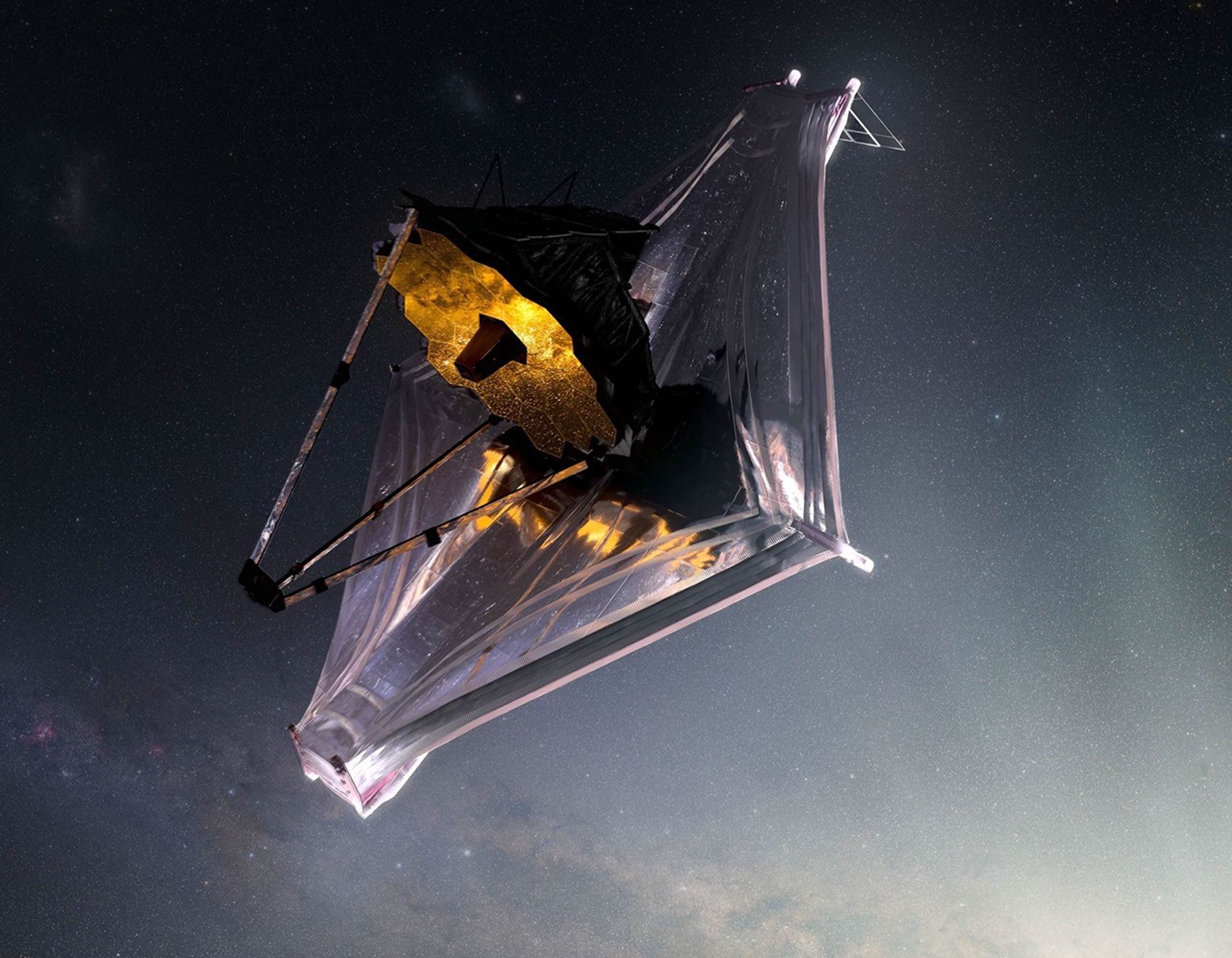
NASA scientists have made a breakthrough in the detection of exoplanets using gravitational waves. The Laser Interferometer Space Antenna (LISA) observatory, currently in development, is expected to detect these tiny ripples in space-time caused by orbiting masses.
According to two new studies led by NASA astrophysicists, LISA could reveal a new population of exoplanets throughout the galaxy by detecting the modification of gravitational wave signals from tightly orbiting white dwarfs. The presence of a planet in these systems would imprint on the gravitational wave signal, allowing scientists to uncover its existence.
This method could potentially detect Jupiter-mass planets up to thousands of light-years away. Casey McGrath, a postdoctoral researcher at the University of Maryland and NASA's Goddard Space Flight Center, explained that the presence of an exoplanet in these systems would be detectable through its imprint on the gravitational wave signal.
The findings were published in two papers in The Astrophysical Journal, detailing the potential of LISA to reveal new worlds beyond our solar system. The research provides new insights into the capabilities of the LISA observatory and its potential to expand our knowledge of exoplanets.