4 min read NASA, NOAA Track 2026 Antarctic Ozone Hole Earth’s protective ozone layer remains on track for long-term recovery, despite atmospheric conditions that contributed to a larger Antarctic ozone hole in 2026, NASA and the National Oceanic and Atmospheric Administration (NOAA) reported.
The ozone hole ranked seventh largest by area in 48 years of monitoring, but was not as deep as other large holes on record. From Sept. 7 to Oct. 13, peak ozone depletion season, the average extent of the hole covered about 9.6 million square miles (25 million square kilometers).
Scientists continually track the amount of ozone in the stratosphere because it acts as the Earth’s sunscreen that helps shield life from harmful solar radiation. This is distinct from ground level ozone, which is an air pollutant commonly resulting from human activities.
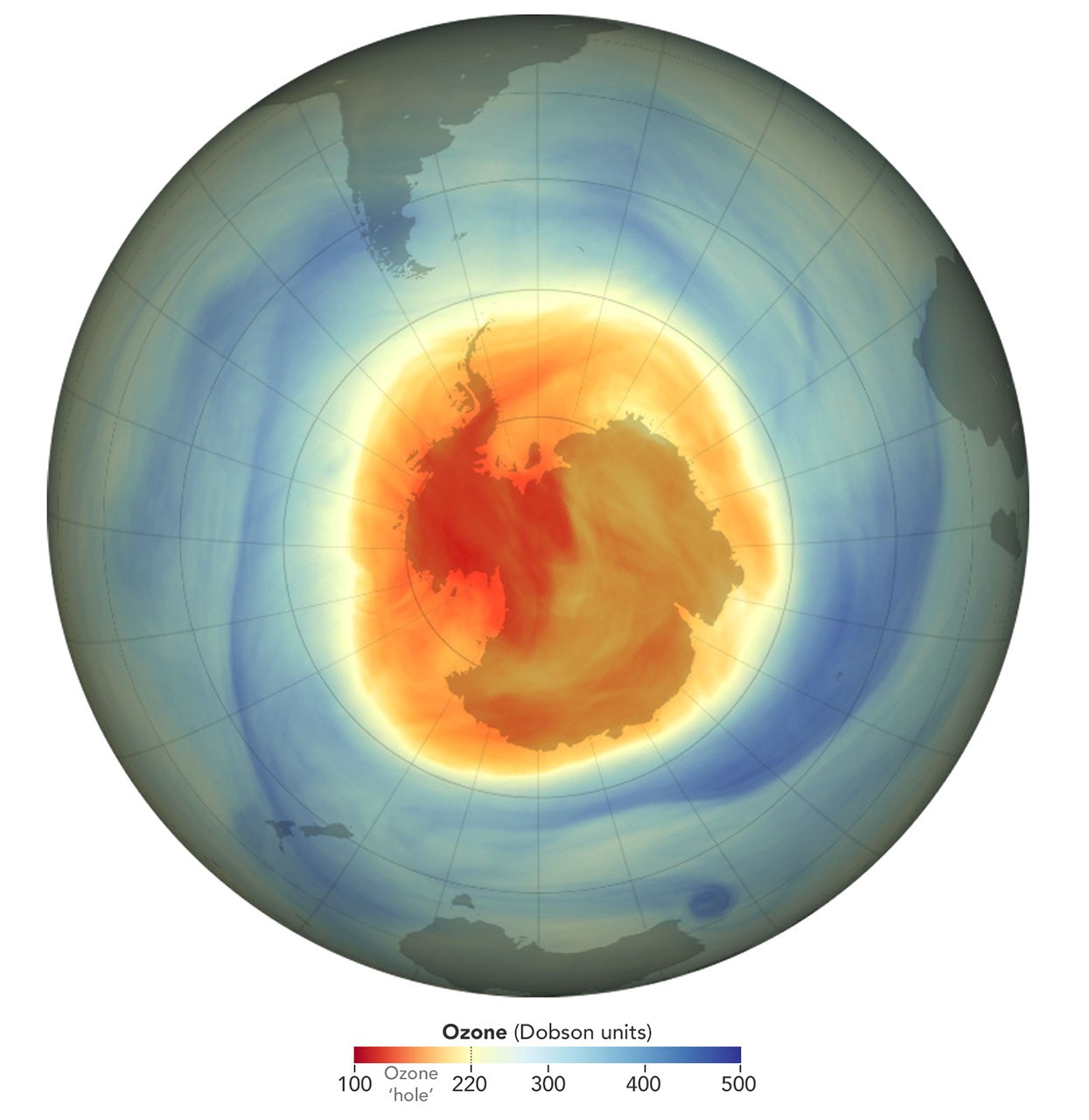
This data visualization shows the area and shape of the ozone hole on September 18, 2026, the day of its annual maximum extent.
The ozone hole ranked seventh largest by area in 48 years of monitoring, but was not as deep as other large holes on record. From Sept. 7 to Oct. 13, peak ozone depletion season, the average extent of the hole covered about 9.6 million square miles (25 million square kilometers).
Scientists continually track the amount of ozone in the stratosphere because it acts as the Earth’s sunscreen that helps shield life from harmful solar radiation. This is distinct from ground level ozone, which is an air pollutant commonly resulting from human activities.
This data visualization shows the area and shape of the ozone hole on September 18, 2026, the day of its annual maximum extent. Scientists define the ozone hole as the area in which ozone concentrations drop below the historical threshold of 220 Dobson units.
NASA Earth Observatory/Lauren Dauphin “The annual ozone hole has been forming later in the season in recent years, which tells us the ozone layer is healing,” said Paul Newman, a senior scientist at the University of Maryland, Baltimore County, and longtime leader of NASA’s ozone research team at the agency’s Goddard Space Flight Center in Greenbelt, Maryland.