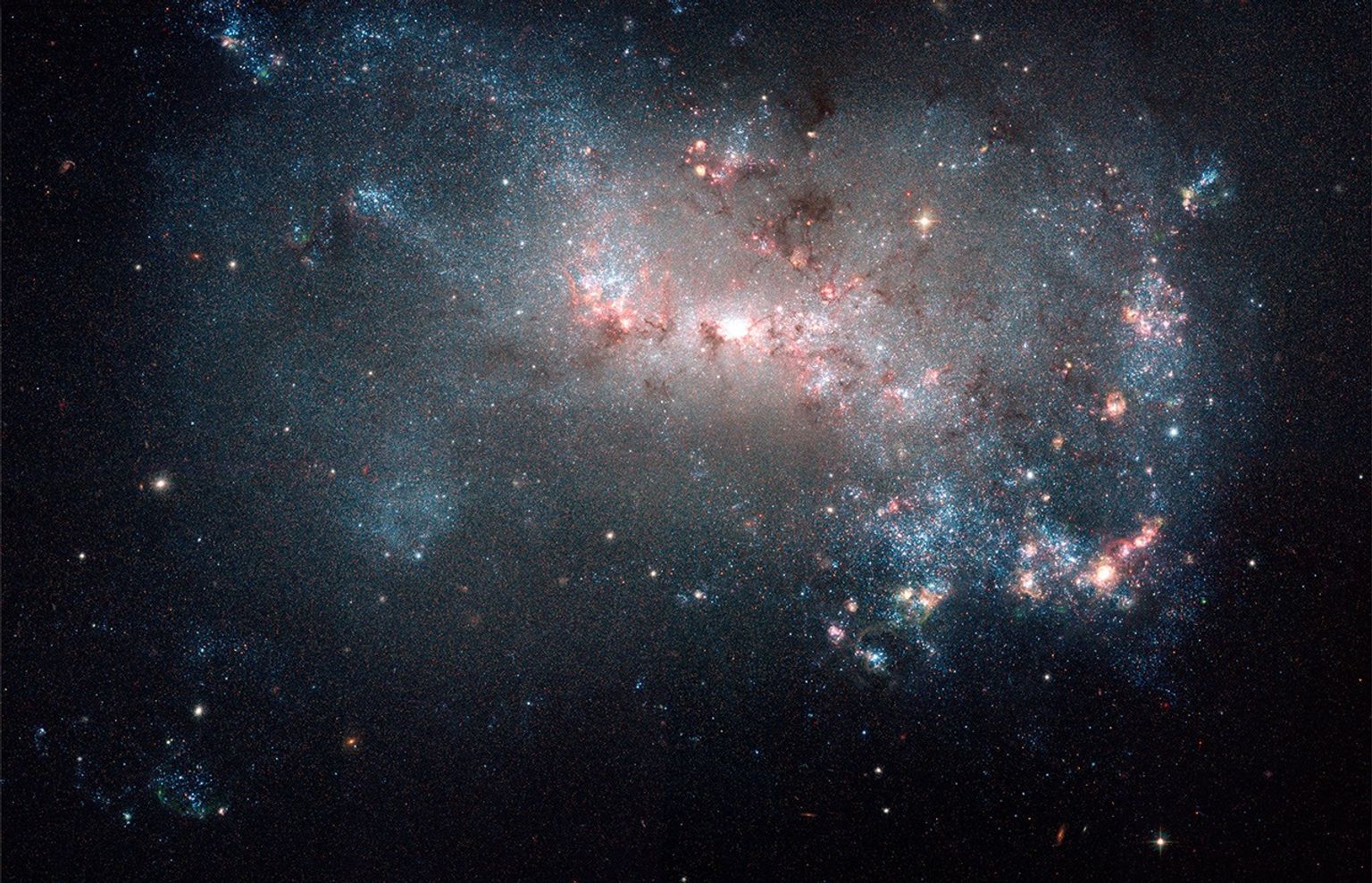
Researchers using NASA's Hubble Space Telescope have discovered a significant amount of missing oxygen in nearby dwarf galaxies. A study of 37 dwarf galaxies found that they retain only a small fraction of the oxygen produced by their stars. According to scientists, this oxygen is likely ejected from the galaxies through galactic winds driven by massive stars and supernova explosions.
The study, known as the Galaxies Losing Oxygen via Winds project, aimed to understand how oxygen is distributed within galaxies and in the space between them. Oxygen is a key element in this research due to its abundance and relatively easy detection.
By tracing oxygen, scientists can gain insights into galaxy evolution and the distribution of chemical elements. The findings suggest that current models may underestimate the effectiveness of galactic winds in removing oxygen from low-mass galaxies.
The research team used archival data from Hubble, as well as other telescopes, to analyze the oxygen content in the dwarf galaxies. The results provide new information on the fate of oxygen and other heavy elements in these galaxies. The discovery sheds light on the process of galaxy evolution, particularly in the context of oxygen distribution and the intergalactic medium.
Further research is needed to fully understand the implications of these findings and to determine the ultimate destination of the missing oxygen.