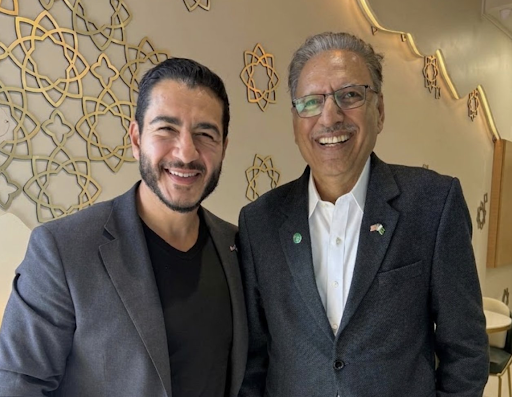
Senator-elect Abdul El-Sayed of Michigan is facing criticism for his comments on Israel, in which he stated that he does not believe in "ethnostates" during an interview on Meet the Press. El-Sayed's remarks were in response to a question about whether Israel should exist as a Jewish state, with him saying that he believes in equal rights to peace, dignity, and self-determination.
This statement has sparked controversy, given his past expressions of support for Islamic states and groups that enforce religious law. El-Sayed has appeared at events alongside former Pakistani president Arif Alvi, who has defended Pakistan's anti-blasphemy laws and expressed condolences for a slain Hamas leader.
Alvi has also reinforced Pakistan's opposition to recognizing Israel as a country and has called for a "one state solution" to the Israeli-Palestinian conflict. El-Sayed's association with Alvi has led to allegations that he is applying a double standard to Israel, as he has been critical of the Jewish state while showing support for Islamic regimes.
Rabbi Yaakov Menken, executive vice president of the Coalition for Jewish Values, has criticized El-Sayed's remarks, saying that he only attacks Israel, which provides equal rights to its citizens, while supporting other countries with less tolerant policies.
El-Sayed's Senate transition team has not responded to requests for comment on the matter. The controversy surrounding El-Sayed's comments on Israel is likely to continue, given his past statements and associations.