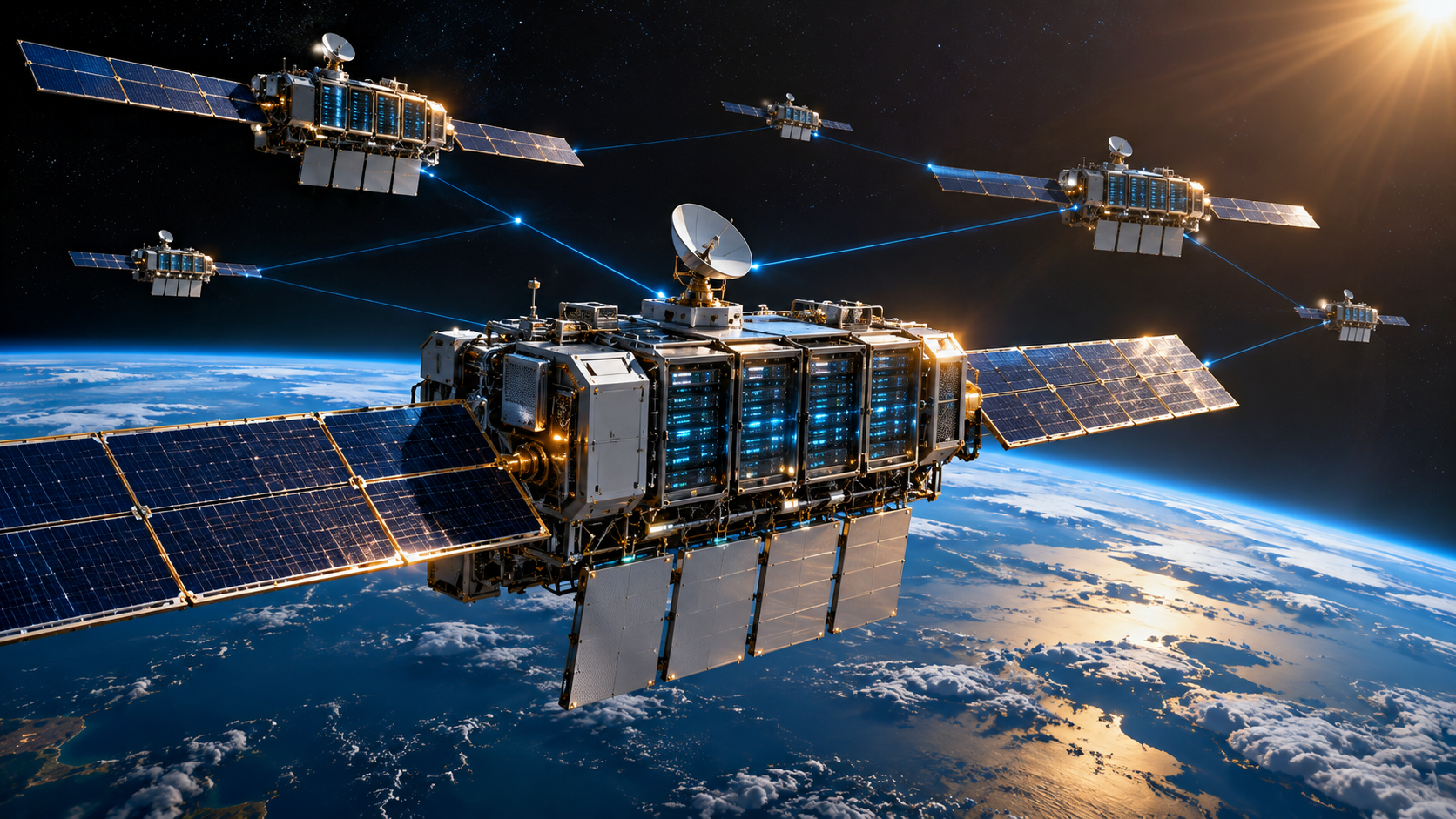
SpaceX Receives Historic Approval for Orbital AI Data Centers
MURRAYREPORT-WASHINGTON — The Federal Communications Commission (FCC) has granted Elon Musk's SpaceX conditional authorization to deploy up to one million satellites designed to operate as artificial intelligence data centers in space.
The November 25, 2026, decision marks the first federal authorization for an orbital computing network of this scale, potentially transforming how artificial intelligence systems process enormous amounts of information.
The proposed satellite constellation, called Starmind, would use solar-powered computing modules orbiting Earth to process data for customers on the ground.
FCC Chairman Brendan Carr praised the project as a major advancement in America's pursuit of artificial intelligence leadership.
SpaceX Faces Major Technical Challenges
Under the authorization, SpaceX must deploy at least one operational satellite by November 2033, with additional deployment requirements extending through 2040.
Supporters believe orbital data centers could reduce demand for electricity and cooling water currently consumed by large computing facilities on Earth.
However, scientists question whether the ambitious project is technically or economically achievable.
Astrophysicist Adam Becker called the proposed million-satellite network unrealistic, pointing to significant challenges involving spacecraft cooling, launch costs and orbital infrastructure.
Although space is extremely cold, its vacuum prevents conventional air-based cooling. Satellites must instead radiate excess heat into space, requiring substantial thermal-management systems.
Astronomers Warn of Dangerous Space Debris
The American Astronomical Society strongly criticized the FCC's approval, warning that the enormous constellation could interfere with astronomical observations.
Scientists fear that large numbers of reflective satellites would increase light pollution, making it increasingly difficult for observatories to study distant stars and galaxies.
Researchers also warn that collisions between satellites could create dangerous clouds of orbital debris, potentially threatening existing communications, navigation and weather satellites.
Additional concerns include atmospheric pollution from frequent rocket launches and spacecraft reentries.
FCC Defends Decision Despite Opposition
The FCC maintained that SpaceX's proposal satisfies applicable orbital debris requirements and serves the public interest.
However, the agency acknowledged substantial opposition from scientists, industry competitors and environmental advocates.
The authorization does not mean SpaceX has already deployed the constellation or demonstrated that its proposed computing network can operate successfully.
The decision opens a new frontier for artificial intelligence infrastructure, but whether SpaceX can safely and economically operate one million satellites remains a major unanswered question.
Source Attribution: Associated Press, Federal Communications Commission, American Astronomical Society — November 25–26, 2026.