Weight-Loss Medications Could Transform Global Food Production
T Murray: Popular weight-loss medications such as Ozempic and Wegovy could have environmental benefits far beyond helping people manage obesity, according to new research published in Nature Communications.
Scientists suggest that widespread use of GLP-1 medications could significantly reduce global food consumption, potentially freeing millions of hectares of agricultural land while improving public health.
Using computer simulations, researchers examined how appetite-suppressing medications might influence global food demand, agricultural production, land use and public health through 2050.
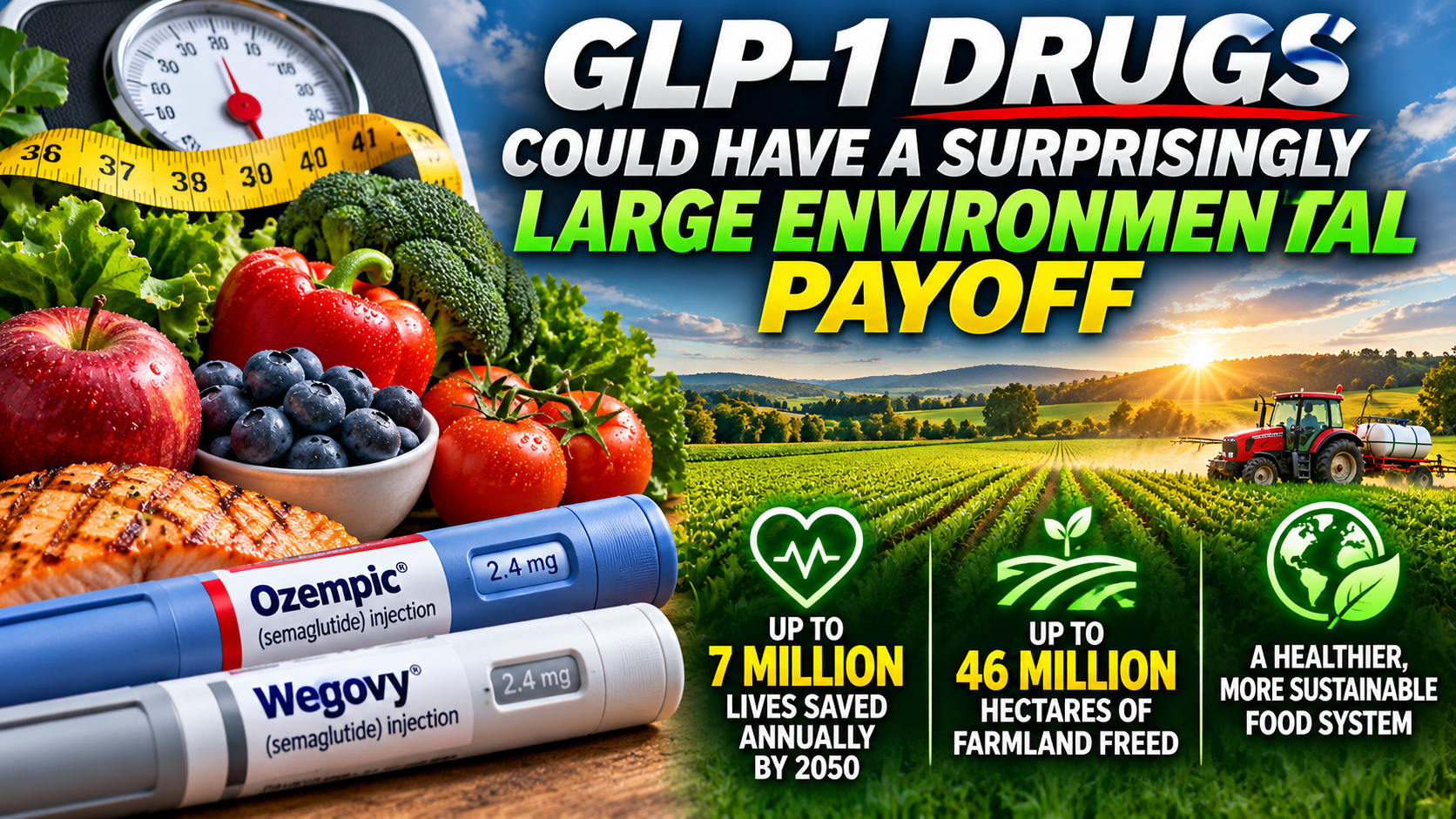
Their findings suggest that widespread adoption among adults living with obesity could help prevent up to 6.6 million deaths annually by 2050, while freeing approximately 32 million hectares of farmland — an area larger than Italy.
Healthier Diets Could Produce Even Greater Benefits
Researchers found that combining GLP-1 medications with healthier eating habits could produce even greater results.
Under that scenario, the models projected that as many as 7 million deaths could be prevented annually by 2050, while approximately 46 million hectares of agricultural land could become available for alternative uses.
Reduced agricultural demand could potentially allow some land to be restored to natural habitats, supporting biodiversity and environmental conservation.
However, scientists cautioned that the global food system is complex.
Lower food demand could reduce prices, encouraging increased consumption among people who do not take the medications and potentially offsetting some environmental benefits.
Researchers Warn Medication Alone Is Not the Solution
The study emphasizes that weight-loss medications should not replace broader efforts to improve nutrition and food accessibility.
Researchers argue that healthier foods must become more affordable and widely available while agricultural policies encourage sustainable production.
They also stress that people living with obesity should not be expected to take medication for environmental reasons.
Importantly, the findings are projections based on modeled scenarios, not demonstrated outcomes. Actual benefits would depend on medication access, long-term use, dietary changes and how food producers respond.
The research highlights a potentially significant connection between obesity treatment, global food consumption and environmental sustainability, suggesting that improving human health could also reduce pressure on the planet's agricultural resources.
Source Attribution: Nature Communications / The Conversation