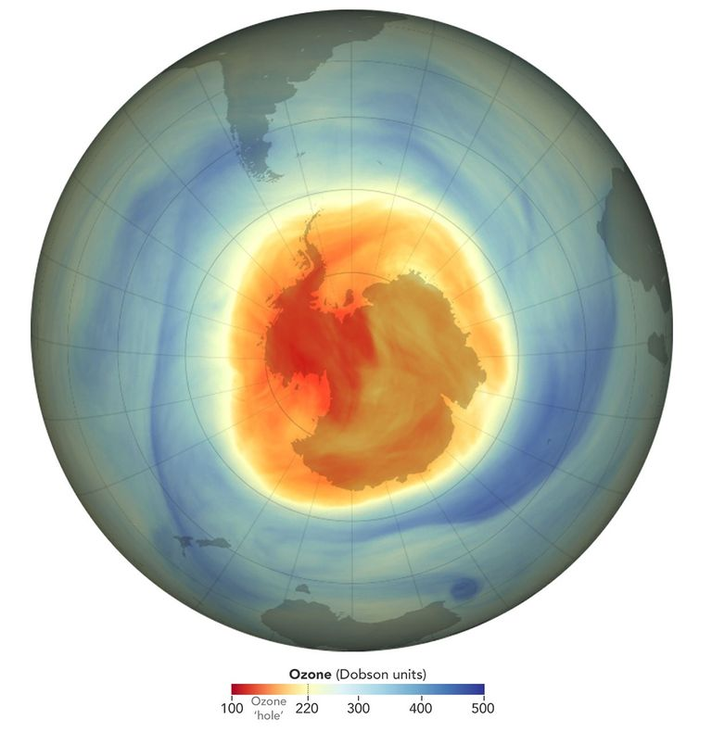
Earth’s protective ozone layer remains on track for long-term recovery, despite atmospheric conditions that contributed to a larger Antarctic ozone hole in 2026, NASA and the National Oceanic and Atmospheric Administration (NOAA) reported. The ozone hole ranked seventh largest by area in 48 years of monitoring, but was not as deep as other large holes on record.
From Sept. 7 to Oct. 13, peak ozone depletion season, the average extent of the hole covered about 9.6 million square miles (25 million square kilometers). Scientists continually track the amount of ozone in the stratosphere because it acts as the Earth’s sunscreen that helps shield life from harmful solar radiation. This is distinct from ground level ozone, which is an air pollutant commonly resulting from human activities.