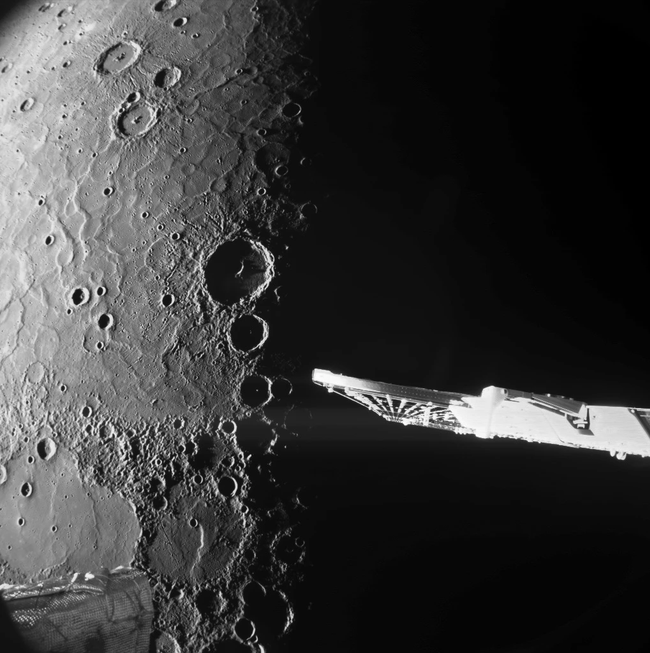
Historic Space Mission Reaches Mercury After Eight Years
MurrayReport: A pair of European and Japanese spacecraft successfully entered orbit around Mercury on Saturday, November 21, 2026, completing an extraordinary eight-year journey through the inner solar system.
The $2 billion mission, known as BepiColombo, represents a major milestone in planetary exploration and marks the first time a spacecraft has entered Mercury's orbit since NASA's Messenger mission ended in 2015.
The European Space Agency (ESA) confirmed the successful arrival after a series of carefully coordinated thruster firings slowed the spacecraft enough for Mercury's gravity to capture it.
Mission controllers in Germany, approximately 94 million miles away, spent several hours analyzing incoming data before confirming the maneuver was successful.
apnews.com+1
Two Spacecraft Will Explore Mercury From Different Orbits
BepiColombo consists of two robotic explorers: ESA's Mercury Planetary Orbiter and Japan's Mercury Magnetospheric Orbiter, known as Mio.
The spacecraft are scheduled to separate in December, allowing scientists to investigate Mercury simultaneously from different orbital positions.
Their instruments will study the planet's magnetic field, internal structure, surface composition, impact craters and ancient volcanic formations.
Researchers hope the mission will reveal how Mercury formed and why the small planet possesses an unusually large metallic core.
Spacecraft Traveled More Than 6 Billion Miles
Launched in October 2018, BepiColombo followed a complex route that included one flyby of Earth, two of Venus and six of Mercury.
These gravity-assist maneuvers helped the spacecraft gradually reduce its speed for orbital insertion.
The journey covered more than 6 billion miles before reaching its destination.
Mercury presents extraordinary engineering challenges because temperatures on its sunlit surface can exceed 800 degrees Fahrenheit.
Mission scientists must protect sensitive instruments from intense solar radiation and extreme heat.
Scientists Prepare for Groundbreaking Discoveries
BepiColombo is only the third mission to explore Mercury up close, following NASA's Mariner 10 flybys in the 1970s and Messenger's orbital mission from 2011 to 2015.
The mission is named after Italian mathematician Giuseppe "Bepi" Colombo, whose work contributed to planetary navigation.
Scientific observations are scheduled to begin in April 2027, with the spacecraft expected to operate for at least one Earth year.
Scientists believe the mission could transform our understanding of Mercury and provide valuable clues about the formation and evolution of rocky planets throughout the solar system.
esa.int+1
Source Attribution: Associated Press, European Space Agency (ESA), Japan Aerospace Exploration Agency (JAXA).