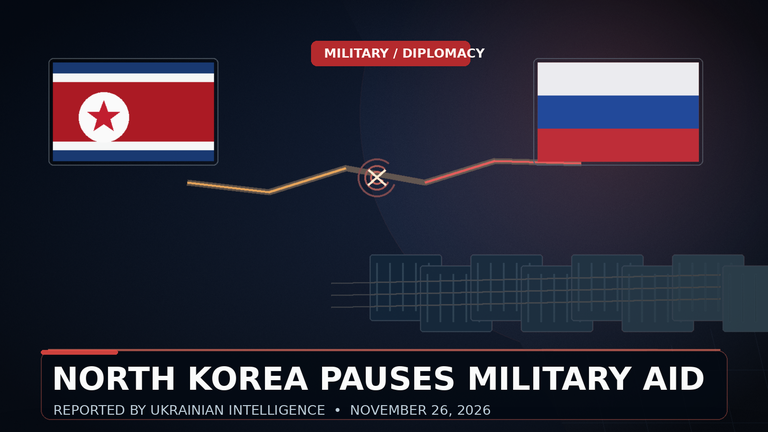
North Korea has reportedly suspended military assistance to Russia, including ballistic missile and artillery ammunition shipments, following a diplomatic disagreement between Kim Jong Un and Vladimir Putin's government.
According to Ukraine's Main Directorate of Intelligence (HUR), Kim personally ordered the suspension after Moscow signaled interest in improving relations with South Korea.
The reported decision could create significant challenges for Russia's military operations in Ukraine, where North Korean weapons and ammunition have become an important part of Moscow's wartime supply network.
North Korea Suspends Missile Deliveries and Military Cooperation
Ukrainian intelligence reported Thursday, November 26, that Pyongyang had stopped deliveries of KN-23 ballistic missiles and artillery ammunition.
North Korea also reportedly prohibited Russian military transport aircraft from entering its airspace.
The disagreement allegedly began after Russian Deputy Foreign Minister Andrey Rudenko discussed improving relations with Seoul and reducing regional tensions.
North Korean Foreign Minister Choe Son Hui reportedly objected, questioning whether Moscow's position was consistent with its strategic partnership with Pyongyang.
The reported suspension has not been independently confirmed by North Korean or Russian officials.
Putin Faces Potential Military Supply Disruptions
North Korea has provided Russia with substantial quantities of artillery shells, ballistic missiles and military personnel since Moscow expanded its invasion of Ukraine in 2022.
Ukrainian intelligence previously estimated that North Korean ammunition accounted for approximately 25% to 40% of supplies used by Russian forces.
The suspension could therefore place additional pressure on Russian military logistics if maintained.
Pyongyang is also reportedly delaying Moscow's request to expand its North Korean military contingent from approximately 8,500 troops to as many as 50,000.
However, there are no indications that North Korean troops already stationed in Russia are being withdrawn.
Russia-North Korea Alliance Faces Uncertainty
Moscow and Pyongyang signed a mutual defense agreement in 2024, strengthening their military and political cooperation.
Despite the reported disagreement, the two governments have continued high-level diplomatic contacts, suggesting their broader alliance remains intact.
The duration of the restrictions remains unclear, and Ukrainian intelligence has not publicly established whether the suspension represents a temporary negotiating tactic or a lasting change in military cooperation.
If confirmed and sustained, the halt in North Korean weapons deliveries could complicate Russia's military campaign in Ukraine while exposing new tensions between two closely aligned governments.
Source Attribution: Reuters, Kyiv Post, The Kyiv Independent, Ukrainian Military Intelligence — November 26, 2026.