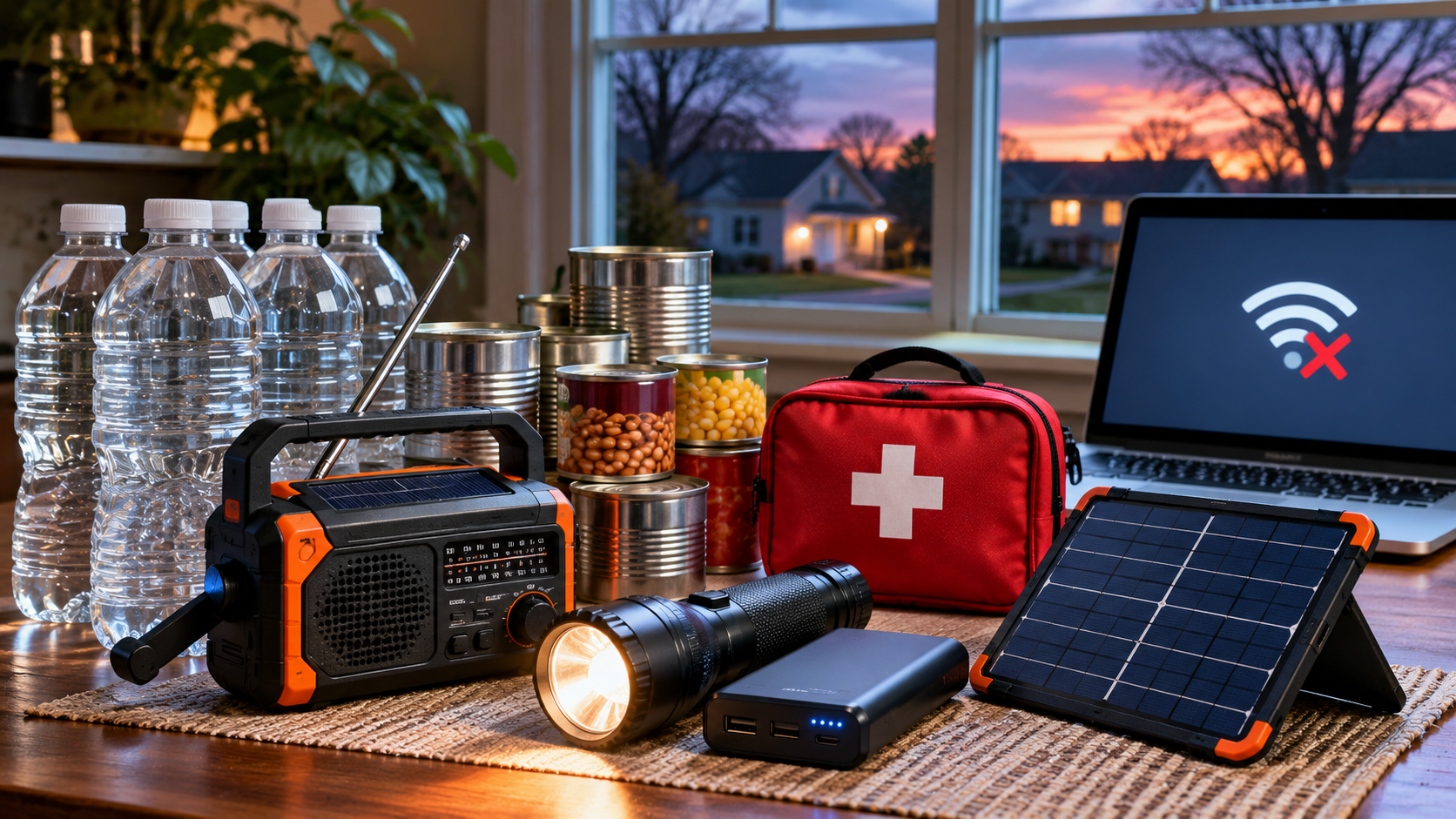
A wave of major technology outages across the United States has prompted some Americans to begin stockpiling emergency food, bottled water, generators and survival equipment amid growing concerns about the reliability of the nation's critical infrastructure.
The disruptions, which affected Microsoft Outlook, airline operations, banking services, Apple platforms and even the National Security Agency (NSA), have fueled speculation about whether the country could face a much larger technological breakdown.
Although federal officials insist there is no evidence connecting the incidents to a coordinated cyberattack, the unusual concentration of failures has left some households questioning how prepared they would be if essential services suddenly stopped functioning.
For many Americans, preparing for a widespread emergency is no longer simply a hypothetical exercise.
Indiana Mother of Five Turns to Emergency Survival Preparations
Korrie Roth, a 37-year-old IT specialist and mother of five from Greenwood, Indiana, is among those taking additional precautions.
According to The Washington Post, Roth previously enjoyed canning fruit as a hobby. But after watching one major technology system after another experience disruptions, she began looking at emergency preparedness more seriously.
Roth purchased a hand-crank emergency radio and additional bottled water. Her father also bought a portable generator following the Microsoft outage.
Despite reassurances from government officials, Roth remained concerned about the possibility of further disruptions and whether Americans were receiving sufficient information about what was happening.
Her concerns reflect a broader sense of unease among people who rely heavily on digital systems for communication, transportation, banking and everyday necessities.
Costco Generator Shortages Signal Growing Emergency Preparedness Demand
The wave of concern is also appearing in consumer purchasing patterns.
David Bellinger, a senior analyst at Mizuho Securities, reported increased demand for emergency supplies at Costco, including generators and household essentials.
According to his research, 21 of the 26 most expensive generator models listed on Costco's website were sold out as of Sunday night.
Some consumers have also increased purchases of canned food, bottled water, batteries and other supplies associated with prolonged power interruptions.
The buying activity suggests that emergency preparedness is gaining attention beyond traditional survivalist communities, although not every purchase can be attributed to fears about the recent outages.
ConsumerAffairs+1
Senators Rick Scott and Josh Hawley Question the String of Outages
The repeated disruptions have also drawn attention from members of Congress.
Sen. Rick Scott, R-Florida, called for greater transparency from government agencies and technology companies, arguing that Americans deserve clearer explanations about the incidents.
Sen. Josh Hawley, R-Missouri, also questioned whether the unusually close timing of the failures could be coincidental.
Their concerns came as speculation spread across social media about potential cyberattacks, infrastructure vulnerabilities and the possibility of additional service interruptions.
However, officials have not presented evidence establishing that the incidents were connected.
The Washington Post+1
Trump Administration Says There Is No Evidence of a Coordinated Cyberattack
President Donald Trump has sought to downplay concerns surrounding the disruptions, suggesting that occasional technology failures are inevitable within large and complex systems.
Secretary of State Marco Rubio similarly stated that federal investigators had found no evidence connecting the incidents to a coordinated attack.
During congressional testimony, Director of National Intelligence Jay Clayton said the outages appeared to involve separate technical problems, including maintenance and system changes.
Other federal officials also maintained that available evidence did not indicate a coordinated or state-sponsored cyberattack.
The administration's reassurances have not eliminated public anxiety, particularly among Americans concerned about the growing dependence of essential services on interconnected technology networks.
The White House+1
FEMA Officials Reportedly Express Private Concerns
According to The Washington Post, two Federal Emergency Management Agency officials, speaking anonymously because they lacked authorization to address the media, expressed personal concerns about the number of technology disruptions occurring within such a short period.
One reportedly received questions from acquaintances about whether they should prepare for a major emergency, while another took out additional cash.
Their comments reflected personal uncertainty and were not an official FEMA warning that a nationwide collapse was approaching.
The distinction is important because individual concerns, even when expressed by government employees, do not establish that authorities have identified an imminent national emergency.
The Washington Post
Britain and Europe Encourage Households to Maintain 72-Hour Emergency Supplies
As Americans debate how seriously to take the recent outages, European governments have increasingly emphasized household emergency preparedness.
The British government launched a public preparedness initiative encouraging households to maintain sufficient basic supplies for approximately three days.
The European Commission has also promoted a strategy aimed at helping citizens remain self-sufficient for at least 72 hours during major emergencies.
Such preparations can include drinking water, nonperishable food, medications, lighting and backup methods of receiving emergency information.
These initiatives address a broad range of possible disruptions and are not evidence that authorities expect an imminent collapse.
Experts Warn That Uncertainty Can Fuel Fears of Catastrophe
Whitney Phillips, a University of Oregon professor who studies information and politics, explained that a rapid succession of alarming news reports can make it difficult for people to distinguish unrelated events from a larger pattern.
When explanations remain incomplete, individuals may attempt to connect separate incidents into a single narrative.
This tendency can become particularly pronounced when information spreads rapidly through social media, where unverified claims and speculation often circulate alongside legitimate reporting.
Risk-management specialists emphasize that transparent communication from government agencies and private companies is essential during periods of widespread public concern.
Clear explanations about what failed, why it happened and what corrective actions are underway can help prevent uncertainty from escalating into unnecessary panic.
Emergency Preparedness Gains Attention as Americans Question Infrastructure Security
The recent incidents have reinforced a longstanding concern about the nation's reliance on technology.
Banking transactions, telecommunications, aviation operations, government communications and essential public services increasingly depend on digital networks that can be disrupted by software errors, equipment failures or malicious attacks.
Even when individual outages are unrelated, their cumulative effects can undermine public confidence in the systems Americans depend on daily.
Emergency preparedness experts generally encourage households to maintain reasonable supplies of water, food, medications, lighting and emergency communications equipment regardless of whether a specific threat is anticipated.
However, the recent outages do not establish that a nationwide blackout, power grid failure or societal collapse is imminent.
For some Americans, including longtime survivalists who already maintain independent power and food supplies, the latest disruptions have simply reinforced existing preparedness habits.
For others, they have served as a first serious reminder of how quickly normal routines can be interrupted.
The larger question emerging from the recent technology failures is whether America's increasingly interconnected infrastructure can remain reliable during unexpected disruptions — and how prepared households would be if essential systems stopped working for an extended period.
Source Attribution: The Washington Post, Associated Press, Reuters, Mizuho Securities and U.S. government statements.