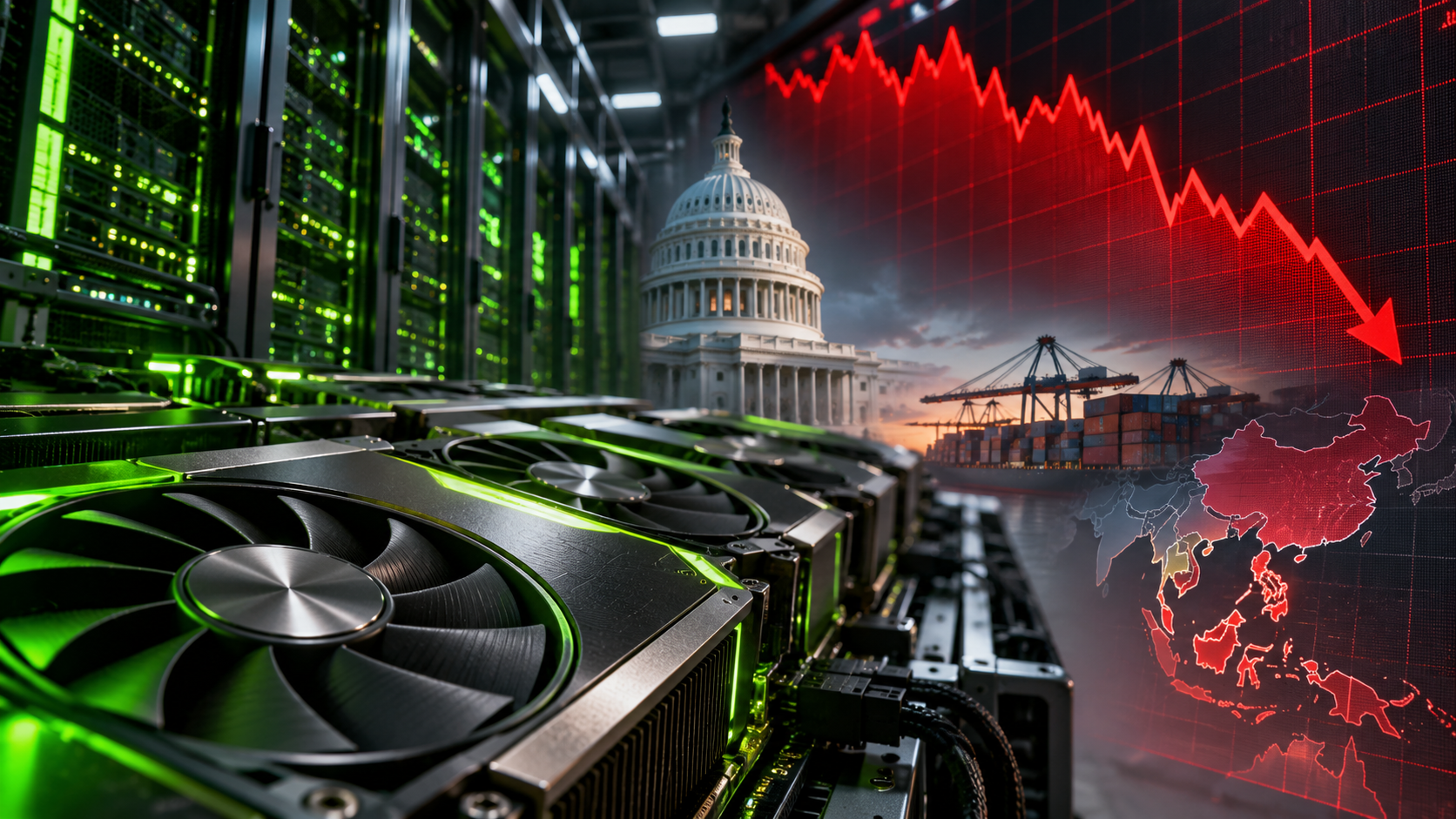
Murrayreport: Nvidia stock market decline, AI chips and federal export regulation concernsFeatured image: AI-generated editorial illustration of Nvidia's stock decline and regulatory uncertainty.Nvidia Shares Retreat After Historic Stock Market Rally
Nvidia shares tumbled more than 5% on Tuesday, November 24, 2026, just one day after the artificial intelligence chipmaker recorded its biggest single-day percentage gain in 23 years following the surprise reinstatement of CEO Jensen Huang.
The company's stock surged approximately 31% Monday after Nvidia's board announced Huang would return as president, chief executive officer and board member.
The extraordinary rally added an estimated $952 billion to Nvidia's market value, setting a one-day record for a U.S. company. However, Tuesday's decline demonstrated that investors remain concerned about unresolved regulatory, political and business risks.
marketwatch.com+1
Federal Investigations and Export Restrictions Cloud Nvidia's Future
One major concern involves U.S. restrictions on advanced semiconductor exports to China and Southeast Asia.
William Blair analyst Sebastien Naji warned that uncertainty surrounding U.S. trade policy could have lasting consequences for Nvidia's competitive position.
Although President Donald Trump's administration supported Huang's reinstatement, analysts caution that federal scrutiny of semiconductor exports remains a significant obstacle.
Nvidia also faces investigations involving Huang's relationship with a former executive at Megaspeed, a technology company connected to concerns over semiconductor shipments.
Nvidia's board has established independent committees to investigate potential national security concerns and strengthen regulatory oversight.
Reuters+1
Wall Street Questions Sustainability of AI Spending Boom
Beyond government investigations, investors are questioning whether the enormous expansion of artificial intelligence infrastructure can continue at its current pace.
Gabelli Funds portfolio manager Hendi Susanto raised concerns about how companies will finance expensive data centers, particularly if interest rates increase.
Higher borrowing costs could potentially weaken investment in AI computing infrastructure, affecting future demand for Nvidia's advanced processors.
Political changes following the midterm elections could also influence federal support for data-center construction and semiconductor export policies.
AMD, Micron and Intel Join Technology Stock Selloff
Nvidia's decline coincided with broader weakness across semiconductor stocks.
Advanced Micro Devices fell approximately 9%, Micron Technology dropped 8%, and Intel declined roughly 5% during Tuesday's trading session, according to the reported intraday figures.
Huang is also scheduled to appear before a Senate committee next week to address America's artificial intelligence leadership and oversight of semiconductor export controls.
Despite renewed confidence in Huang's leadership, Nvidia faces significant questions about regulatory scrutiny, international trade restrictions and the long-term sustainability of the AI investment boom.
Source Attribution: MarketWatch, Reuters, Nvidia corporate filings — November 24, 2026.